What you can pad print
Pad printing covers a wide spread of promotional products where the print area is small, curved or awkward for other methods. This section looks at the kinds of items that suit the process and the practical points that matter before you choose a machine.
Products that suit pad printing well
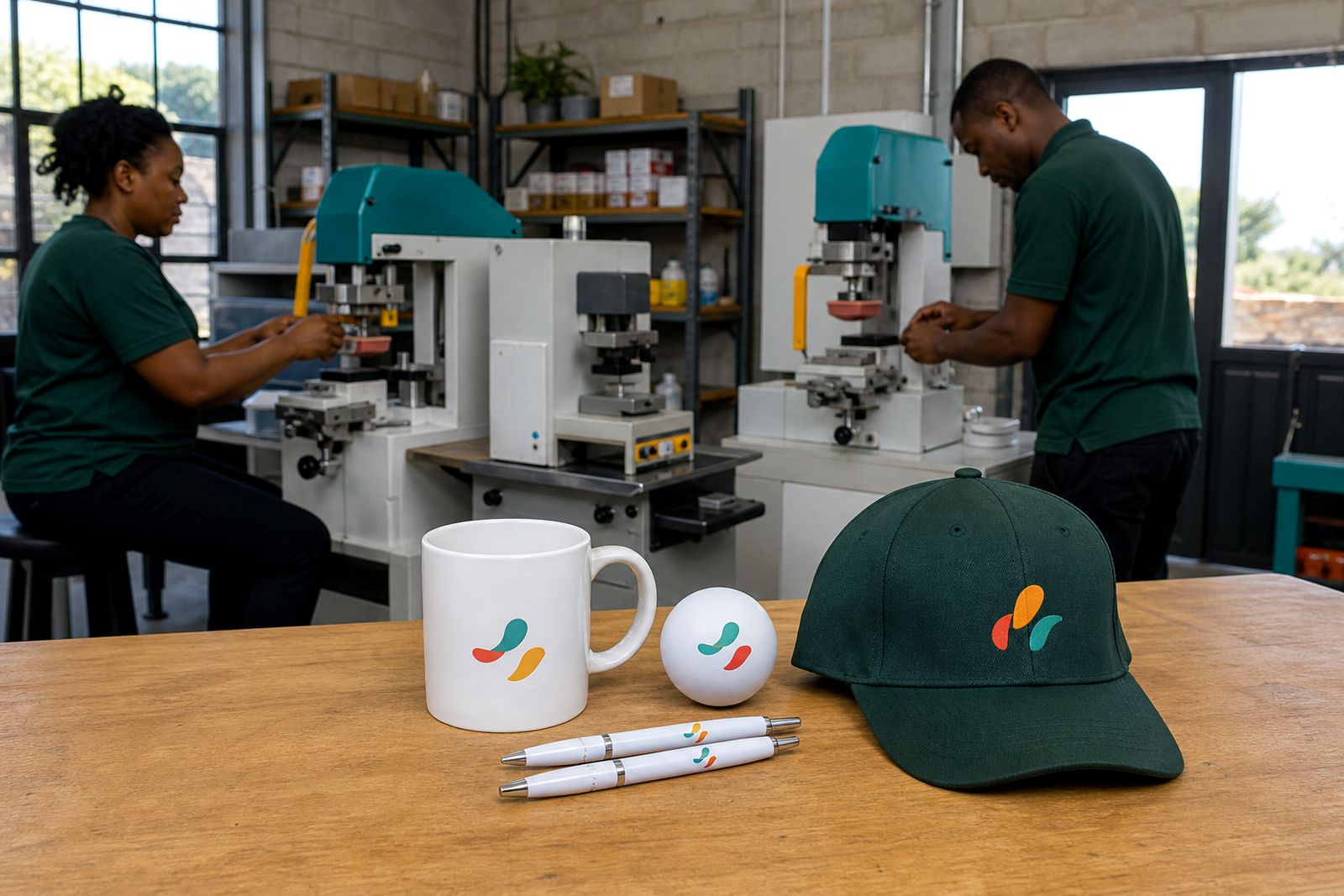
Pad printing is commonly used where the image needs to transfer onto a shaped surface with control and repeatability. In branding workshops that means pens, mugs, bottles, caps, garment labels, keyrings, small cases and many other promotional items that do not present a flat, open print face. The process is especially useful when the logo area is limited and the item needs a neat mark in a set position.
For South African branding businesses, the strongest fit is usually short to medium production on mixed product ranges. A workshop may print a run of pens in the morning and garment labels later the same day, provided the jigging, plate layout and ink choice are correct.
- Pens and small promotional gifts with narrow print zones
- Mugs, bottles and other drinkware with gentle curves
- Caps where the logo sits on a shaped front panel
- Garment labels, tags and flat trim parts
- Plastic, coated metal and selected treated surfaces
Pens and promotional items with small logo areas
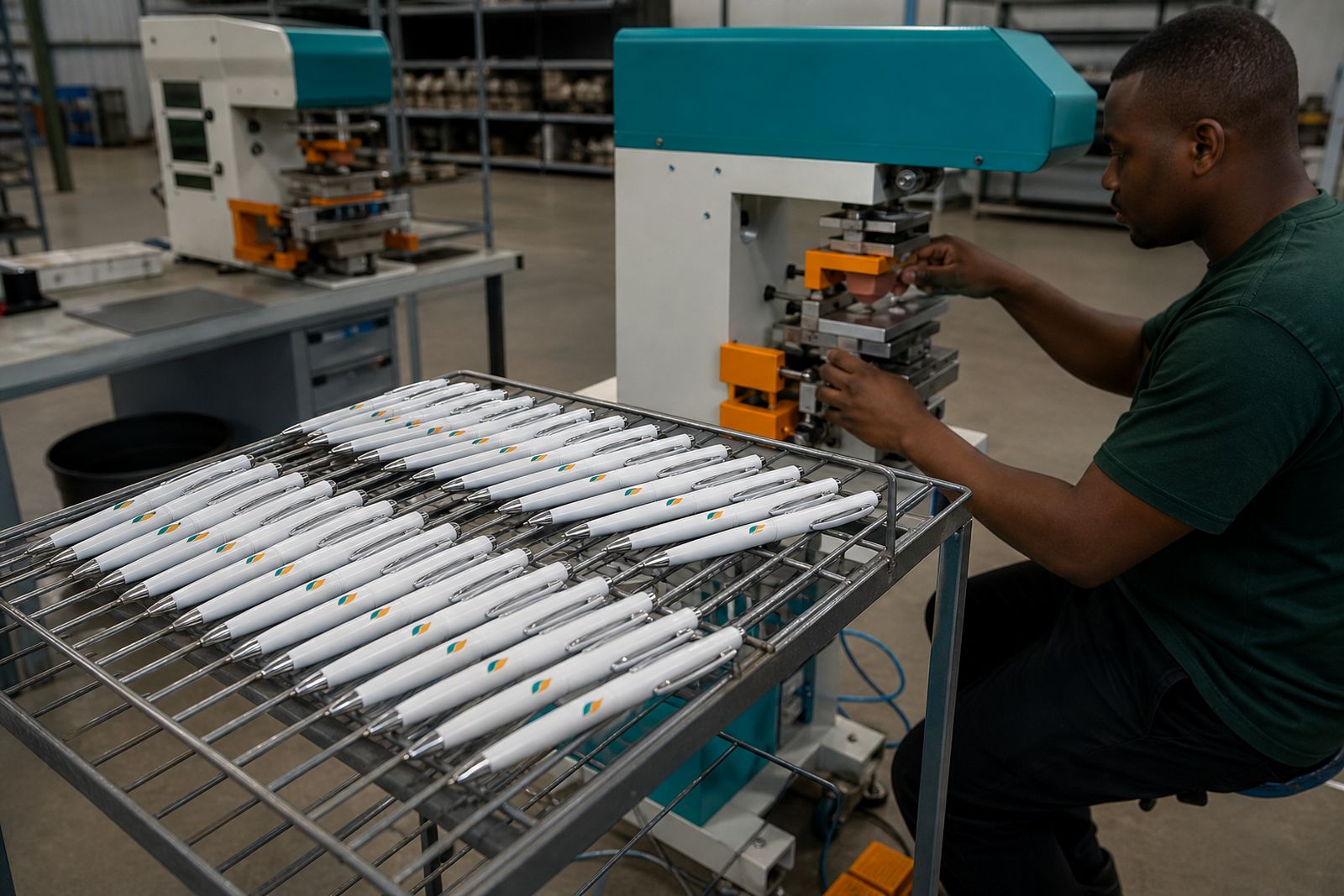
Pens are one of the most common pad printing jobs because the print area is slim and often slightly rounded. A machine with stable stroke control and a suitable silicone pad can place a one colour or multi-colour mark consistently across long runs. The same applies to lighters, keyholders, small torches, compact mirrors and other giveaway items where the artwork is modest in size.
When you move between product shapes, the important part is the fixture. A pen barrel needs firm location so it does not roll, while a flat keyring insert needs registration from edge stops. Small promotional items can look simple at first glance, but poor holding leads to skew print and wasted blanks quite quickly.
- Best for logos, short wording and simple registration marks
- Useful when products vary in shape across the same order book
- Often paired with custom jigs for repeat placement
Drinkware and curved items
Mugs, bottles and similar items often need printing on a curved face where direct flat contact is not possible. Pad printing handles moderate curvature well, provided the artwork size, pad shape and ink system match the item surface. This is where sample testing matters, particularly on coated drinkware, stainless-look finishes and plastics with low surface energy.
Curved items also bring handling questions. Some workshops need single-side logo placement only, while others need opposite-side marking or position control relative to a handle, lid seam or mould line. Those details affect the jig and the machine layout, not just the artwork.
In humid coastal conditions ink behaviour can shift a bit during long runs, so workshops in Durban and nearby towns often keep a closer eye on drying balance and shop-floor temperature than inland teams do.
Caps, labels and other awkward surfaces
Caps and garment labels sit in a different group because the item may be flexible, textured or slightly uneven. A cap front is not truly flat, and a woven or coated label can behave differently from a smooth plastic tag. Pad printing is useful here because the silicone pad can conform enough to place the image where a rigid print head would struggle.
For labels and trim parts, registration is usually the first concern. For caps, the bigger issue is holding the item in a way that keeps the logo area steady without crushing the shape. It sounds minor but it changes the job completely.
- Caps need support that matches the front panel shape
- Garment labels often need finer artwork control than giveaways do
- Textured surfaces may need testing before full production starts
- Small parts benefit from plate layout planned around repeat runs
How to choose between the application types
The best starting point is not the product name but the print condition. Ask whether the surface is flat, curved, flexible, textured or coated, then look at image size and colour count. A single colour logo on a pen asks for something quite different from a two colour mark on a mug with a fixed handle position.
- If the item rolls or rocks, plan for a purpose-made jig.
- If the artwork needs more than one colour, check registration tolerance early.
- If the product has a coating or unusual plastic, test ink adhesion before committing to volume.
- If the logo area is tiny, choose pad size and plate depth around detail retention.
- If the item has a visible orientation point, such as a handle or seam, build that into the fixture.
Most branding workshops choosing their first machine look at product mix first. If the daily work is mainly pens and small gifts, one route makes sense. If the work includes larger curved items and repeat alignment points, the machine and fixture plan may need to step up a level.
Matching the job to machine, consumables and setup
No application stands on its own. The item, the machine, the ink, the silicone pad, the cliche and the fixture all work together. A neat print on a curved bottle can fail if the pad shape is wrong, even when the machine itself is perfectly suitable. In the same way, a good plate image will still give poor results if the product is not held firmly.
That is why this section links closely with machines, consumables and setup support. If your workshop prints promotional items for clients rather than for the public, the aim is repeatable output that operators can manage through normal production shifts without constant correction. Midrand-based setup support helps Gauteng buyers get running on site, while machines and consumables can be sent to workshops in every province.
For guidance on a specific product range, use our contact form and tell us what items you print, how many colours you need and whether the surface is flat or curved.
Explore the range
Pad printing pens and promotional gifts
A practical look at setting up pad printing runs for pens, keyrings and other promotional items.
Read more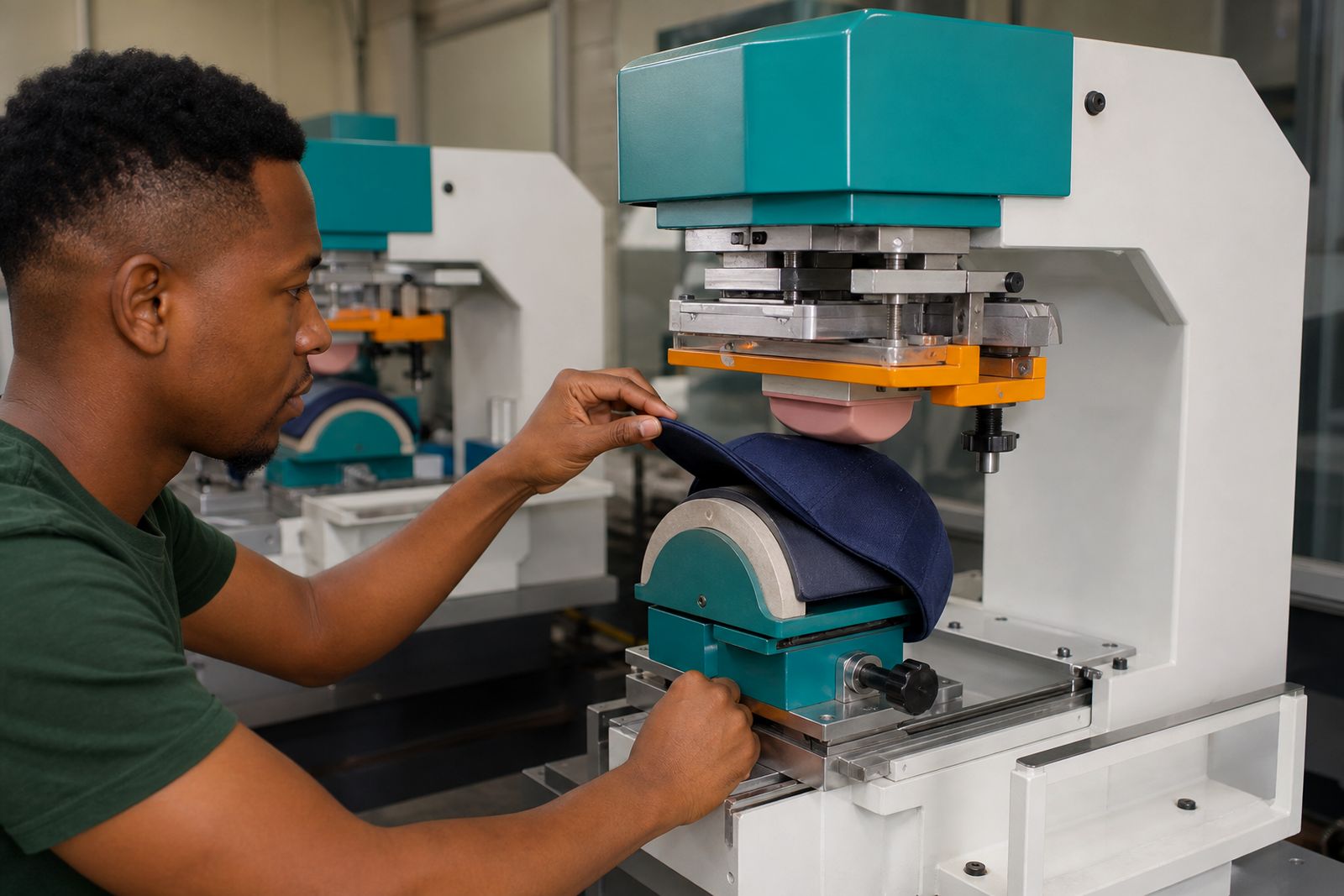
Pad printing garment labels and caps
Useful guidance for decorators printing neck labels, cap peaks and other curved apparel items.
Read more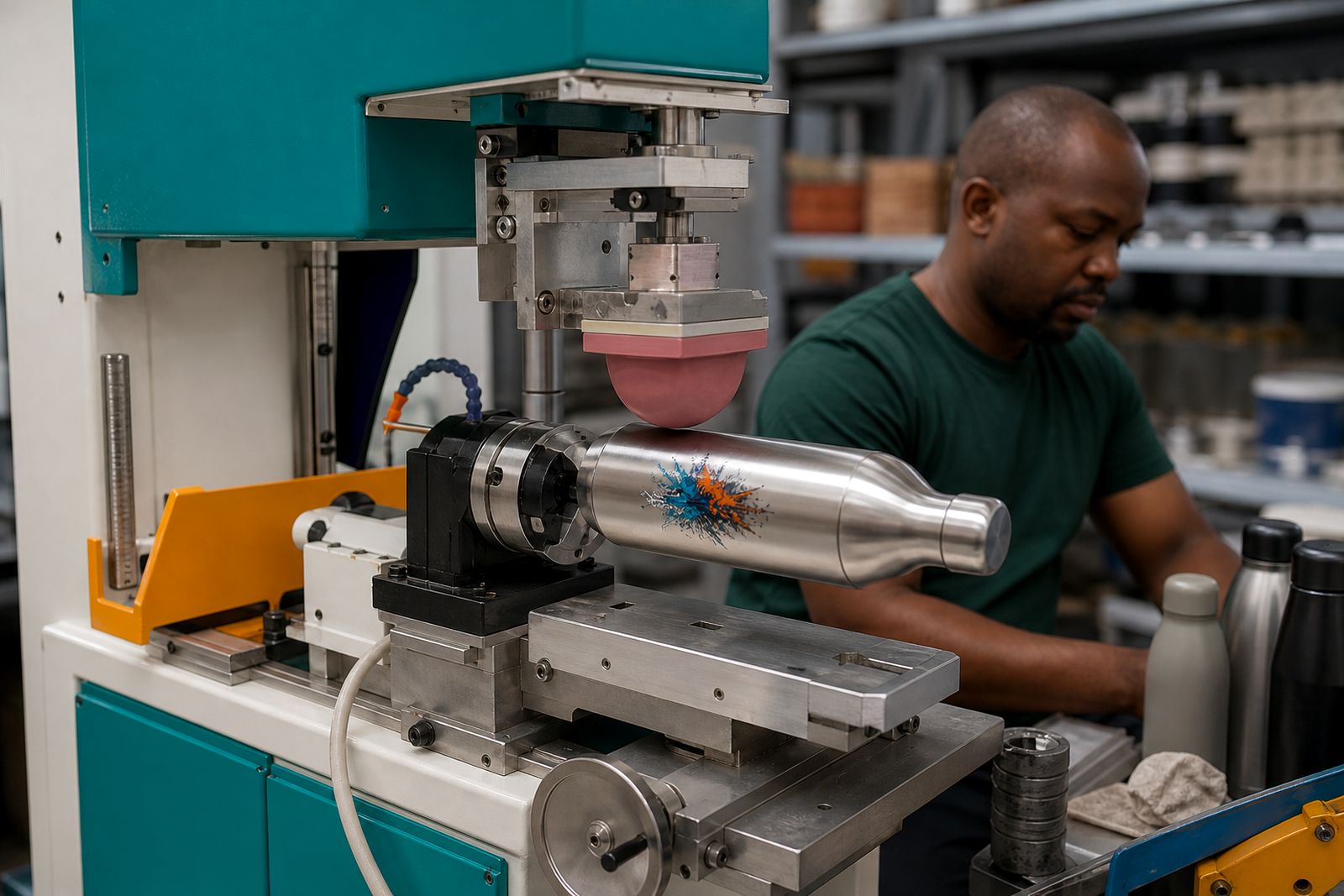
Pad printing mugs, bottles and curved items
Practical notes for clean pad printing on mugs, bottles and other rounded promotional items.
Read more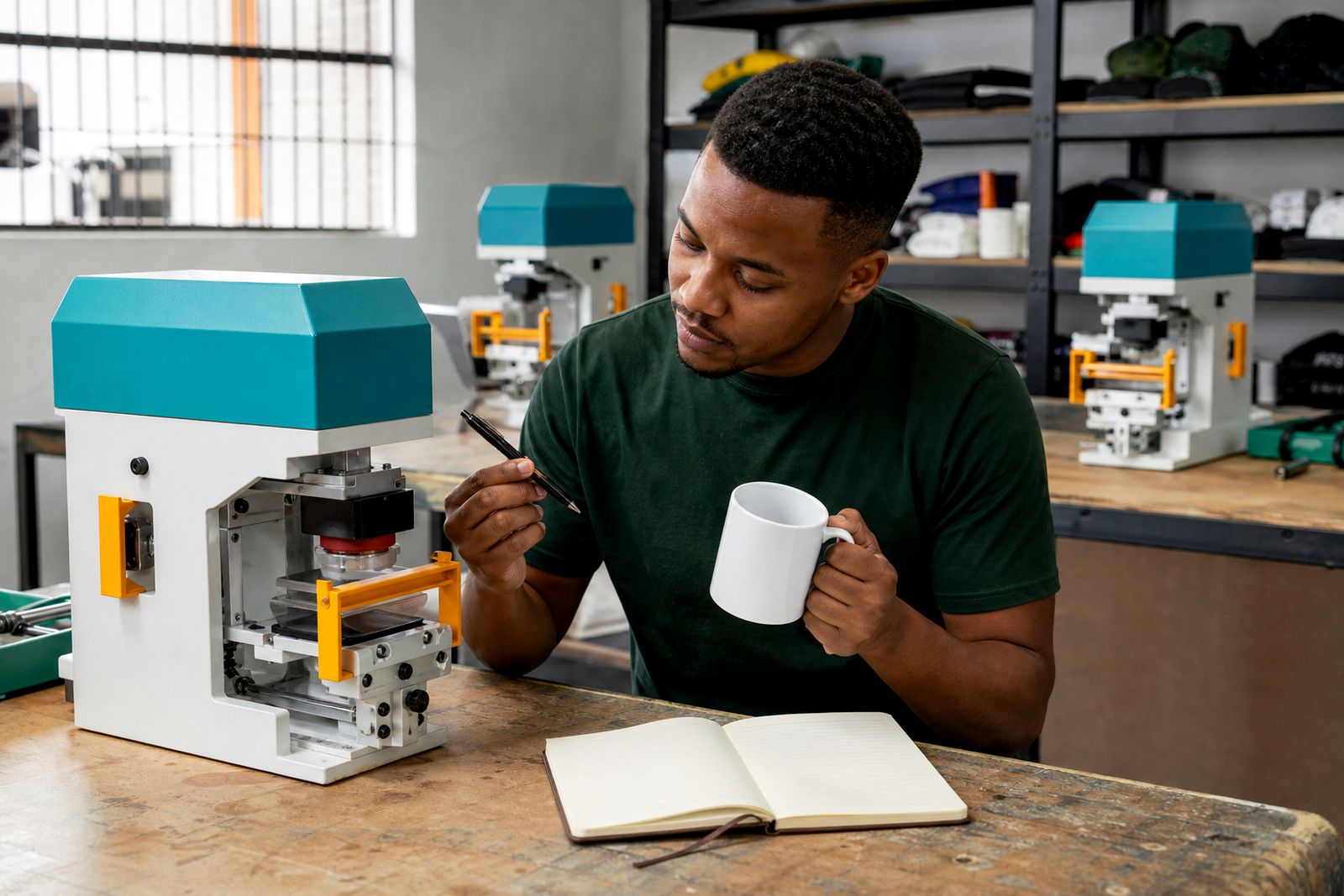
Choosing your first pad printer
A practical buying guide for branding shops choosing a first pad printer for everyday promotional work.
Read moreWhat our Pad Printing customers say
Verified Google reviews
Questions we get asked
Can pad printing work on both flat and curved products?
Yes. It is widely used on flat parts and on gently curved items such as pens, mugs and bottles. The result depends on the pad shape, fixture design and the surface receiving the print.
Do you print promotional items for the public?
No. We sell, set up and support pad printing equipment, consumables and related tooling for branding businesses that do the printing in-house.
What details help when asking about an application?
Send the product type, material, approximate print area in millimetres, number of colours and whether the item has a handle, seam, taper or any other orientation point. That gives a solid base for discussing the machine and fixture route.
Tell us about the job
Send sizes, materials and where you are through our contact form, and we will come back with the practical options.
Open the contact form