

Custom fixtures and jigs
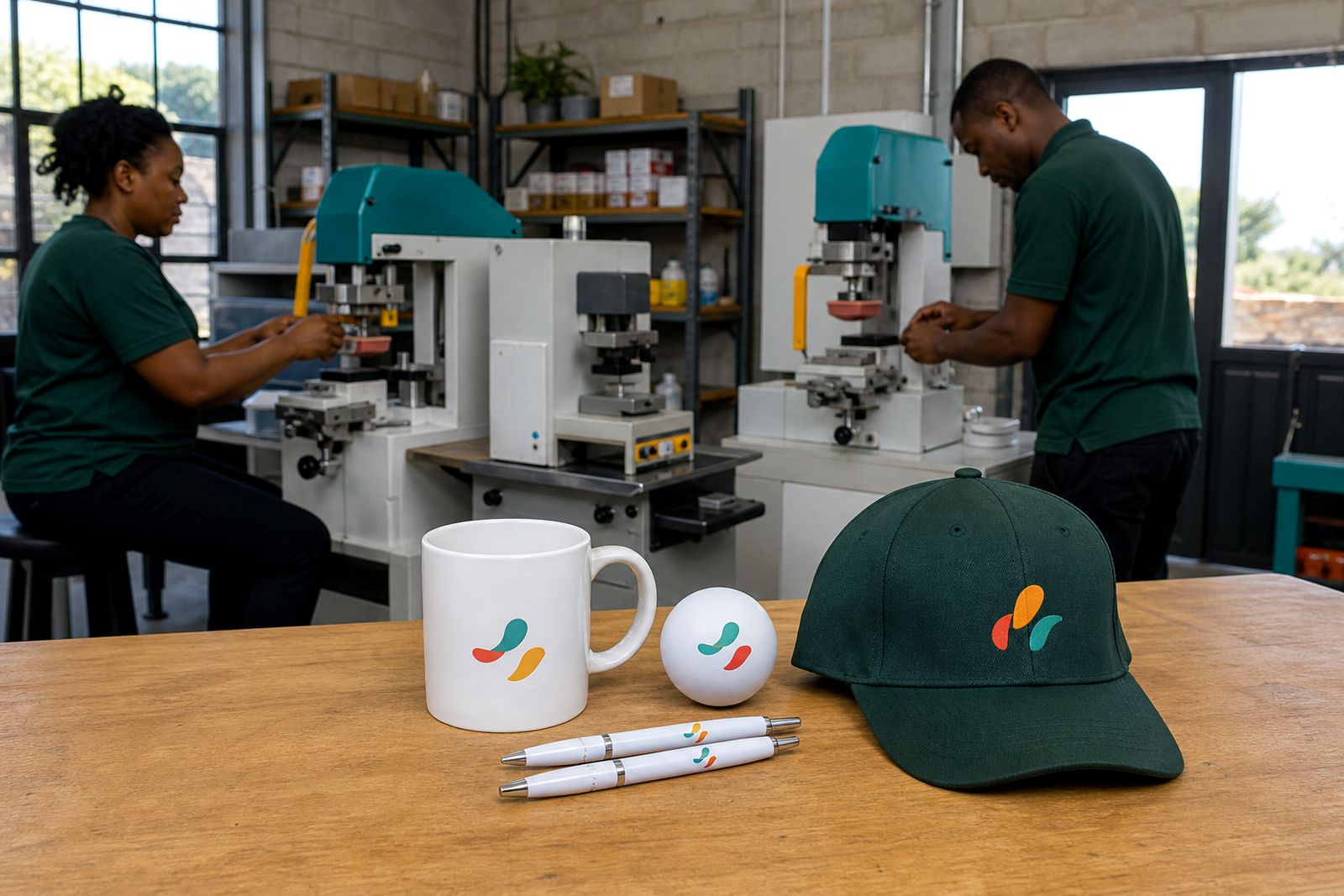
A good print starts with the item sitting in exactly the same place every cycle. We make custom holding fixtures and jigs for pad printing on pens, mugs, caps, labels and awkward promotional items.
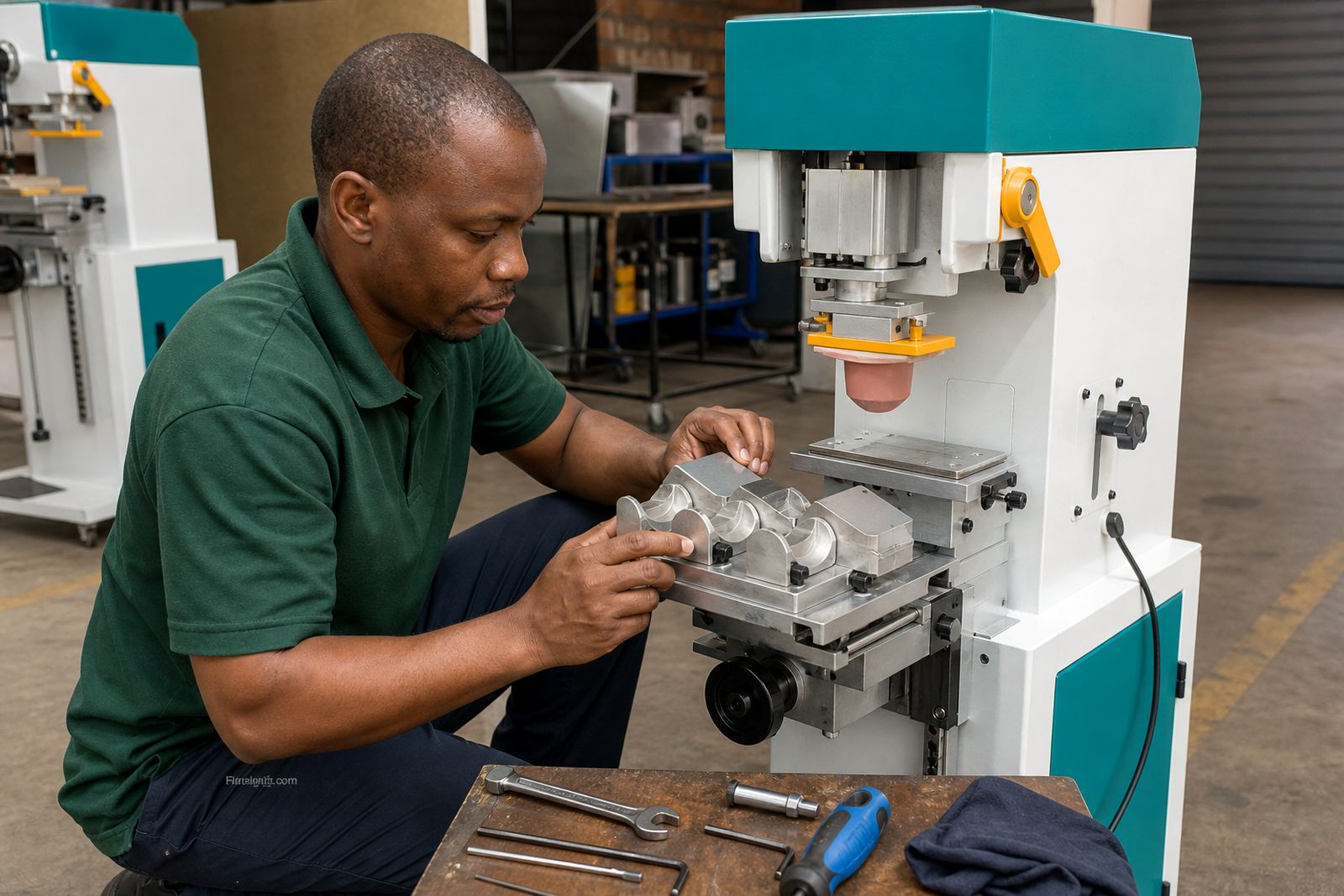
Fixtures built around the actual item
Pad printing on a curved or uneven product goes wrong quickly if the item can twist, rock or sit at a different height from one impression to the next. Our custom fixtures and jigs are made to match the shape of the product and the way it loads into the machine. That applies to straight pens, tapered pens, clip pens, mugs with handles, bottles, caps, domed lids, garment labels and small moulded giveaways.
We build workholding for branding businesses that run their own pad printing, not for public walk-in printing. A fixture can be made for a single item, or for a family of items where the body shape and print position are close enough to share one base. The aim is repeatable placement, clean registration and faster loading at the machine.
- Single-position holders for test runs, short batches and specialised products
- Multi-up layouts where the machine stroke and item size allow it
- Dedicated nests for pens, mugs, caps and bottles
- Support blocks, side stops and handle clearance cut-outs
- Clamp points and location pins matched to your machine bed
What is included in the service
Each job starts with the product itself, the intended print area and the machine it will run on. From there we prepare a fixture concept that suits the item shape, the loading direction and the way the image needs to sit on the product. We also look at whether the same jig must work with one cliché position or several print stations.
The service can include sample checking, measuring, fixture manufacture, trial fitting, setup notes and adjustments after the first run. If your machine also needs a new plate layout, pad selection or ink advice to match the fixture, we can include that in the same discussion so the job does not get split across different shops.
- Item measurement and print area review
- Fixture design for the chosen machine and stroke
- Material cutting, shaping and assembly
- Mounting hole alignment to the machine table where required
- Trial fit on sample items
- Operator notes for loading direction and print position
From sample to finished jig
The first step is seeing the actual product. For plain promotional items this may be one physical sample, while for repeat contract work it is better to send several pieces from the same batch. We check body diameter, taper, handle position, seam lines, clips, lids and any mould marks that could affect seating. On caps we look at crown shape, panel firmness and how the item must be supported under the print area.
After measuring, we decide how the item will register in the holder. Some products need a simple pocket and rear stop. Others need side support, rotational indexing or a shaped saddle so the print face stays level. Once the fixture is made, we test fit the sample and confirm that loading is practical for the operator not just accurate on paper. If needed, small corrections are made before dispatch or installation.
For clients in Gauteng we can fit and check the jig on site where the machine layout needs to be seen in person. For other provinces we courier the finished fixture with setup guidance based on the machine details and samples supplied.
What to prepare before sending the job
The more accurate the item information is, the better the finished jig will be. A quick cellphone photo helps, but dimensions and physical samples matter more than photos on their own. If the item has more than one possible print position, mark the preferred area clearly. That saves time and avoids building a holder around the wrong face of the product.
- One or more unprinted samples of the exact item
- Overall item size in millimetres if samples are not yet available
- The intended print area width and height
- Machine make, model and table size
- Whether the print is single colour or multi-colour registration
- Any artwork orientation notes, such as clip-up on a pen or handle-right on a mug
If you already have a worn or inaccurate jig, send that too. It often shows what the operator has been fighting with on the floor, and where the hold points need to change. On bottle and mug work, note whether the item finish is glossy, coated or lightly textured, because that can affect how firmly it sits under light clamping.
How fixture costs are usually worked out
Pricing is based on the shape of the item, the amount of machining or forming needed and whether the job is a once-off holder or part of a wider setup package. A straight pen fixture is usually simpler than a mug fixture with handle clearance and rotational positioning. A jig that must register across two or four colours can also take more time because the placement tolerance is tighter.
Material choice plays a part as well. Some holders can be made from stable sheet material with formed supports, while others need more durable components where the operator will load thousands of cycles. If you need several identical jigs for multiple machines, that changes the costing compared with a single prototype piece. Where possible we also assess whether a shared base can take change parts for related items, which can lower replacement costs later on.
Aftercare, adjustments and long-run use
A fixture should not be treated as a throwaway part. Keep it clean, keep the mounting points tight and store it where the shaped surfaces will not be knocked out of line. We provide practical guidance on loading direction, contact points and pad approach so the holder works properly with the rest of your setup. If the product changes slightly on a later batch, we can review whether the existing jig can be adjusted or whether a fresh insert is the better route.
Wear usually shows first at the stops and load points. If operators force parts into the nest, accuracy slips and ink position starts to wander. Bring that up early, because a small correction can save wasted stock. We also assist with related items such as replacement pads, fresh clichés and setup checks where a fixture issue is being confused with an ink or pad issue.
To discuss a new fixture, send the item details through our contact form and note the machine it must fit.
What our Pad Printing customers say
Verified Google reviews
Questions we get asked
Can one jig fit several pen styles?
Sometimes. If the barrel size, taper and clip position are close, a shared base with minor change points may work. Where shapes differ too much, a dedicated holder gives better print placement.
Do I need to send the machine details?
Yes. Table size, stroke limits and mounting points affect how the fixture is built. A good holder must suit both the product and the machine it runs on.
Can you help if my current fixture gives uneven prints?
Yes. We can assess whether the problem comes from poor seating, worn stops, incorrect item height or a setup issue linked to the pad, ink or plate position.
Also worth a look
Tell us about the job
Send sizes, materials and where you are through our contact form, and we will come back with the practical options.
Open the contact form