Pad printing consumables
Good pad printing depends on more than the machine alone. The right ink, pad and cliche need to match the item shape, print size and production pace so the image transfers cleanly.
Consumables that match the job
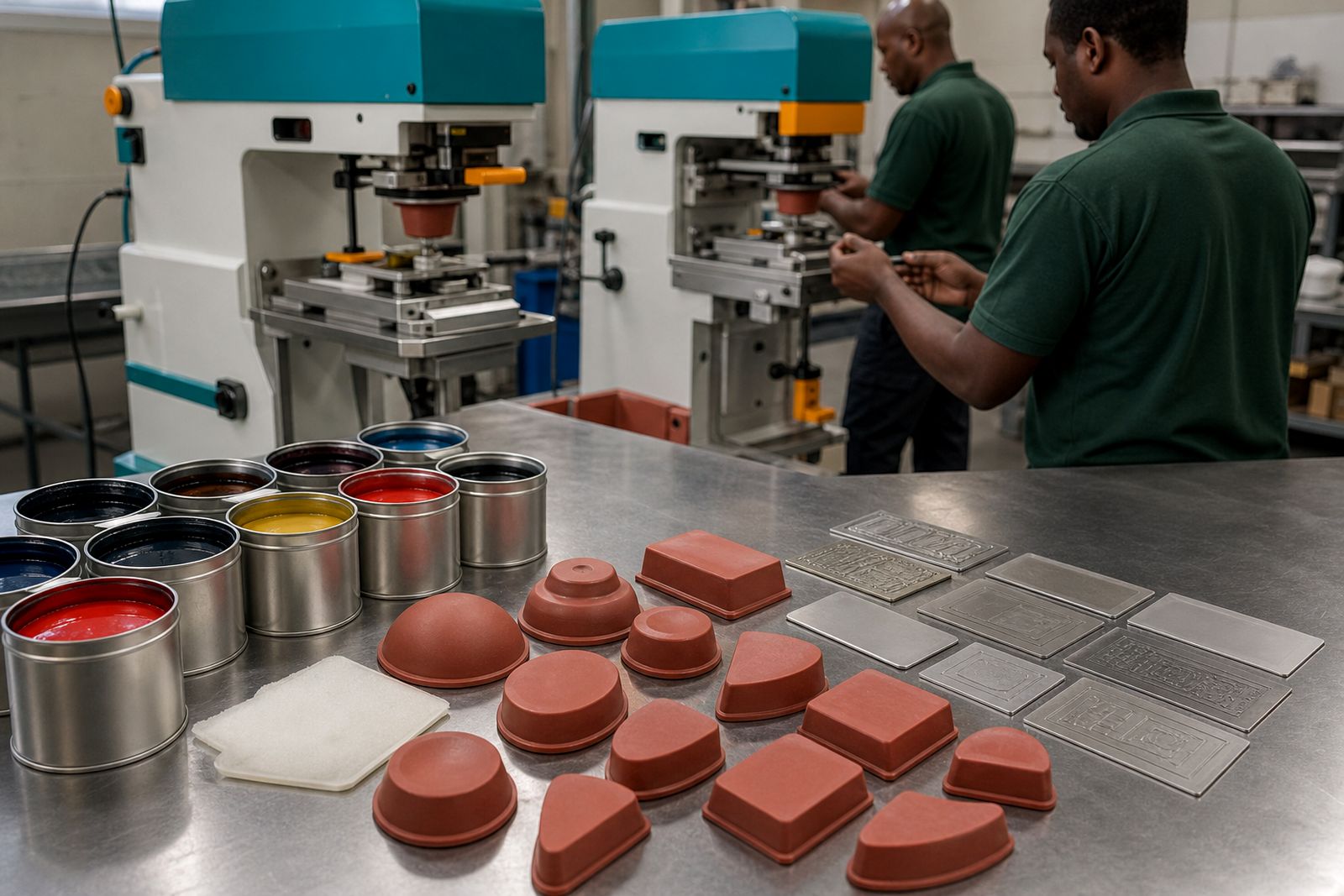
Our consumables range covers the three parts every pad printing shop works through on a daily basis: ink, silicone pads and cliches. These need to be chosen as a set, not one by one, because a pad that works well on a flat label may be wrong for a curved mug, and an ink that bonds to a coated pen barrel may not suit fabric label stock.
From our Midrand base we supply branding businesses across Gauteng and send consumables to every province. We also help match the setup to common promotional items, garment labels, caps and drinkware, so the machine is not fighting the material at the print station.
Choosing pad printing inks
Ink choice starts with the substrate. Plastic pens, coated metals, ceramic surfaces, treated bottles and woven or satin label materials each accept ink differently. Adhesion matters, but so do drying behaviour, opacity and how the ink handles repeated runs in a warm shop.
When a job moves between inland winter air and coastal humidity, the same artwork can behave differently on the cliché and on the part. That is why ink selection should consider the item material, the required finish and the production environment, not just the colour swatch.
- For pens and small promotional items, fast and consistent transfer is usually more important than heavy film build.
- For mugs, bottles and other curved pieces, adhesion and resistance after curing carry more weight.
- For garment labels, the ink must suit the label material and keep fine text legible.
- For darker items, stronger opacity may be needed to stop the print looking washed out.
If you are unsure which ink system fits a particular item, send the product details through our contact form with the material and print area.
Silicone pads and image transfer
The pad is where many print issues start or get solved. Pad shape, size and silicone hardness affect how the image lifts from the plate and lands on the product. A pad that is too soft can distort fine text, while a pad that is too hard may struggle to wrap over a slight curve.
Small flat items often need a more controlled contact area, while deep curves and awkward promotional shapes call for a taller profile. Even when the artwork stays the same, changing the pad can tidy up edges and improve coverage quite a bit.
- Flat labels and panels usually suit a pad with a stable face and limited side movement.
- Pens and narrow barrels often print better with a shape that can settle onto the curve without stretching the image too far.
- Caps and uneven panels may need a profile that reaches the print spot cleanly.
- Large solid logos often need a different pad choice from fine registration marks or small text.
Cliches for repeatable detail
The cliche holds the image, so its quality affects every cycle of the job. Clean engraving depth, correct artwork sizing and a surface suited to the production volume all matter. If the plate is wrong, the operator will keep chasing faults with ink mix and pad pressure and still lose time.
We supply cliches for routine branding work and can assist with the right plate approach for repeated orders, fine line logos and multi-colour layouts. For businesses printing labels, tiny characters and registration between colours need extra care, because a small shift becomes obvious very quickly.
Custom jigs also play a part here. If the item does not locate the same way each cycle, even a good plate cannot hold the print position properly.
A practical way to compare your options
Most buying mistakes happen when consumables are chosen from one feature only, usually pad size or ink colour. A better approach is to compare the full job requirement.
- Item shape: flat items are usually simpler than tapered, curved or irregular products.
- Material: plastic, coated metal, ceramic and label stock each need different ink behaviour.
- Artwork detail: bold logos allow more flexibility than fine text or tight multi-colour registration.
- Production volume: longer runs place more emphasis on plate consistency and stable ink handling.
- Finish required: some jobs need a strong visual laydown while others prioritise neat detail.
- Environmental conditions: temperature and coastal humidity can change how ink opens and transfers.
If you already know the product, print size and artwork style, we can point you to the right starting combination without overcomplicating the setup.
Support for shops running daily production
We do not print branded items for the public. Our work is focused on supplying and supporting branding businesses that run pad printing in-house, whether they are setting up a first machine or tightening an existing line.
Along with consumables, we assist with machine setup, operator training, servicing and the fitting of custom fixtures for repeat jobs. That matters when you are moving between pens in the morning and mugs or labels later in the day, because each product asks something different of the print head, pad and workholding.
For a suitable consumables recommendation, send the item type, approximate print area, material and artwork details through our contact form.
Explore the range
Pad printing inks
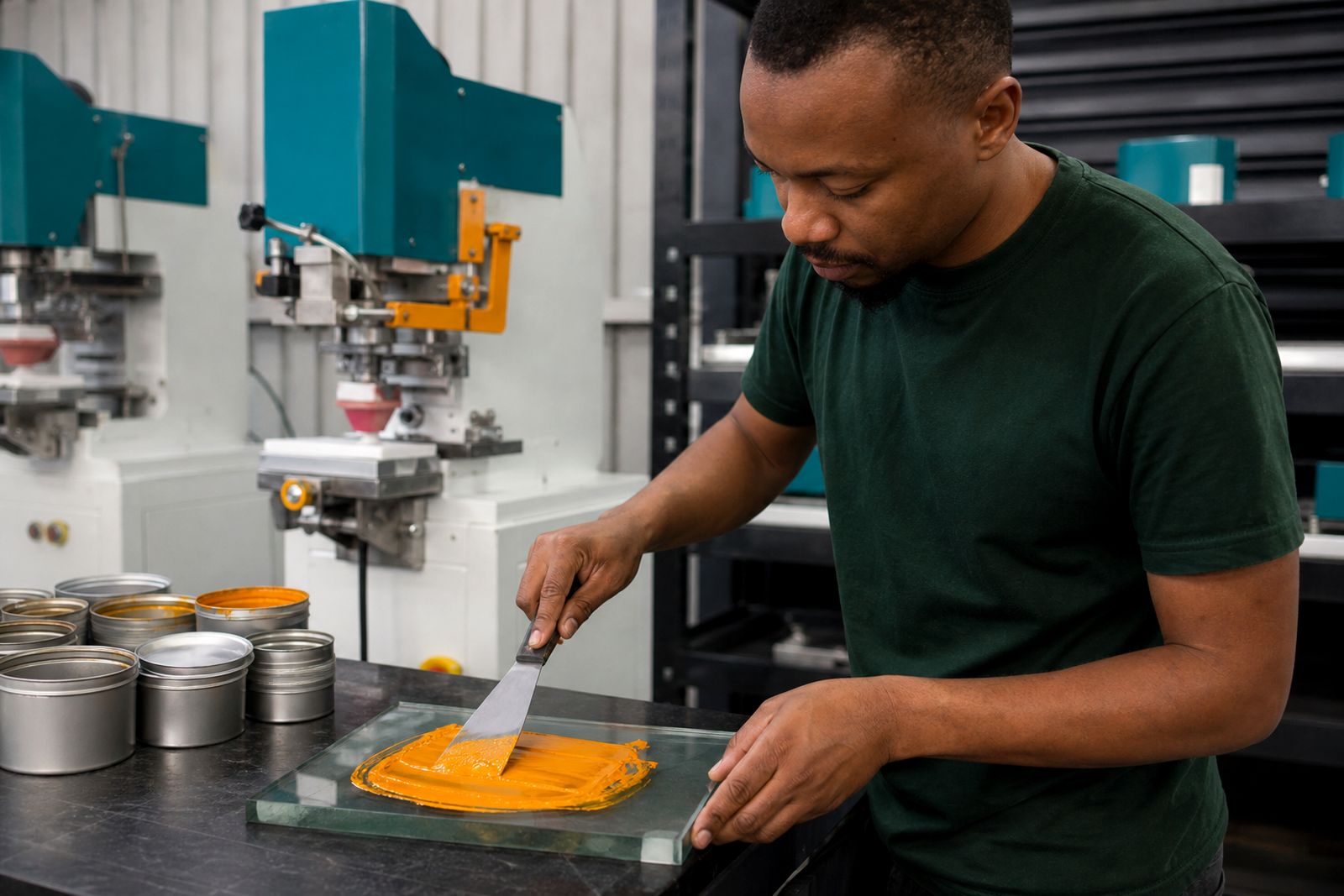
Pad printing inks matched to plastics, metal, glass and fabric labels, with the right thinners and curing guidance.
Read more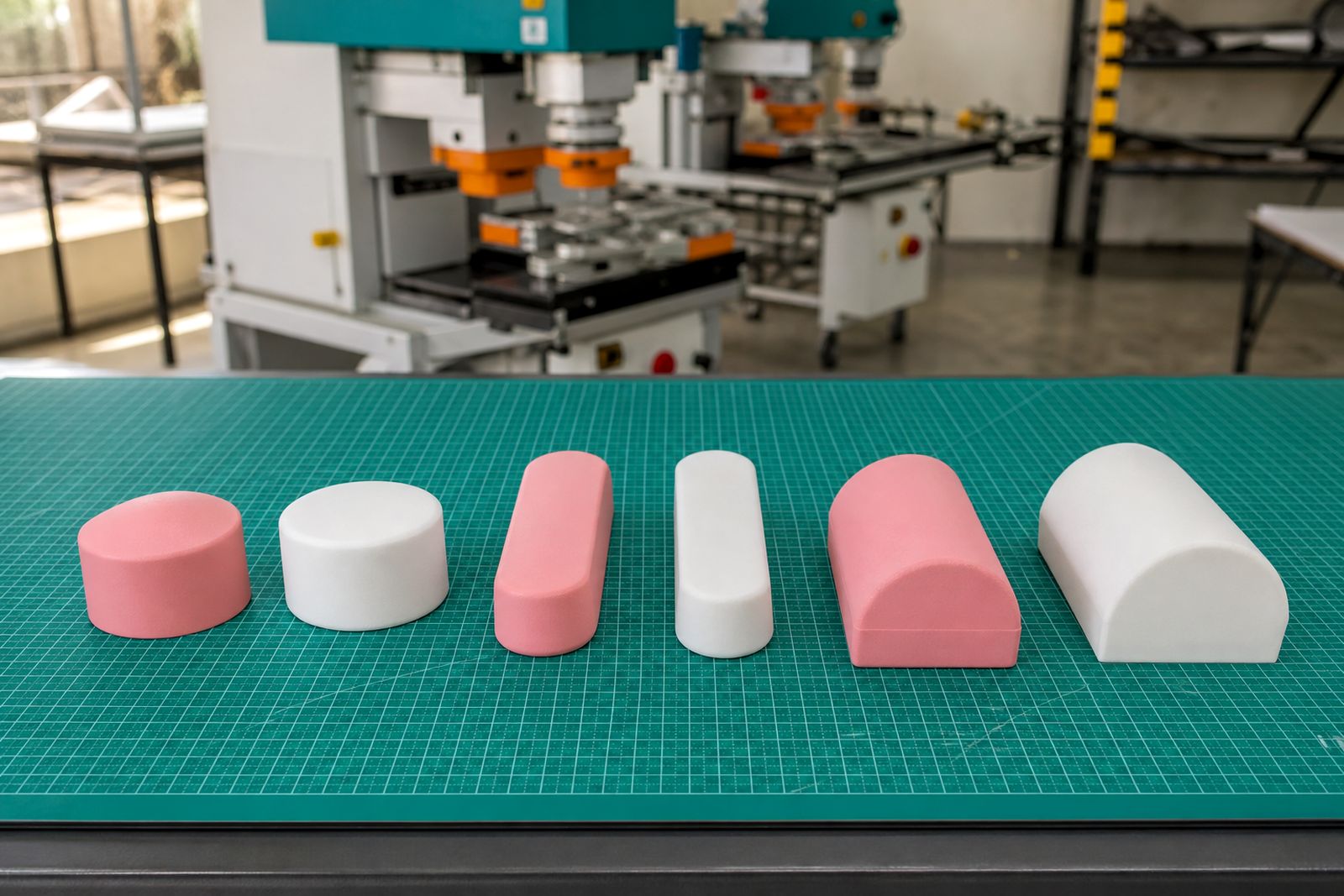
Silicone pads
Pad shape, size and hardness make the difference between a clean transfer and a frustrating setup.
Read more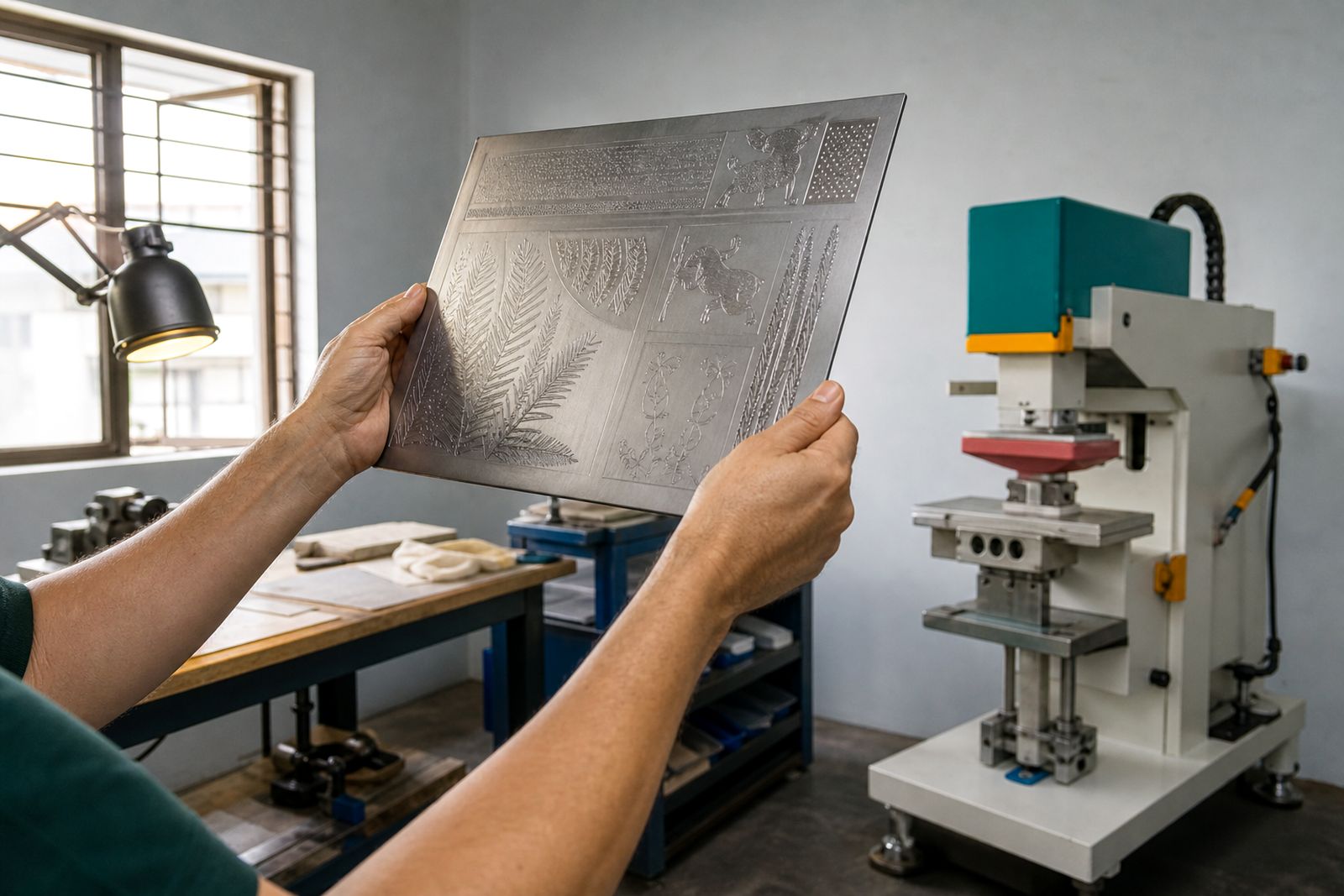
Cliches and plates
Accurate cliches and plates matched to your artwork, machine type and print surface.
Read moreWhat our Pad Printing customers say
Verified Google reviews
Questions we get asked
Can the same ink be used on pens, mugs and garment labels?
Not usually. Different materials need different ink characteristics for adhesion, coverage and handling, so the ink should be matched to the specific product.
How do I know which silicone pad shape to choose?
The main factors are the item shape, print size and artwork detail. Flat prints, curved barrels and uneven surfaces often need different pad profiles and hardness.
Do you supply cliches and jigs for repeat branding work?
Yes. We supply cliches and can assist with custom jigs for items that need consistent placement across repeated production runs.
Tell us about the job
Send sizes, materials and where you are through our contact form, and we will come back with the practical options.
Open the contact form