Setup and operator training
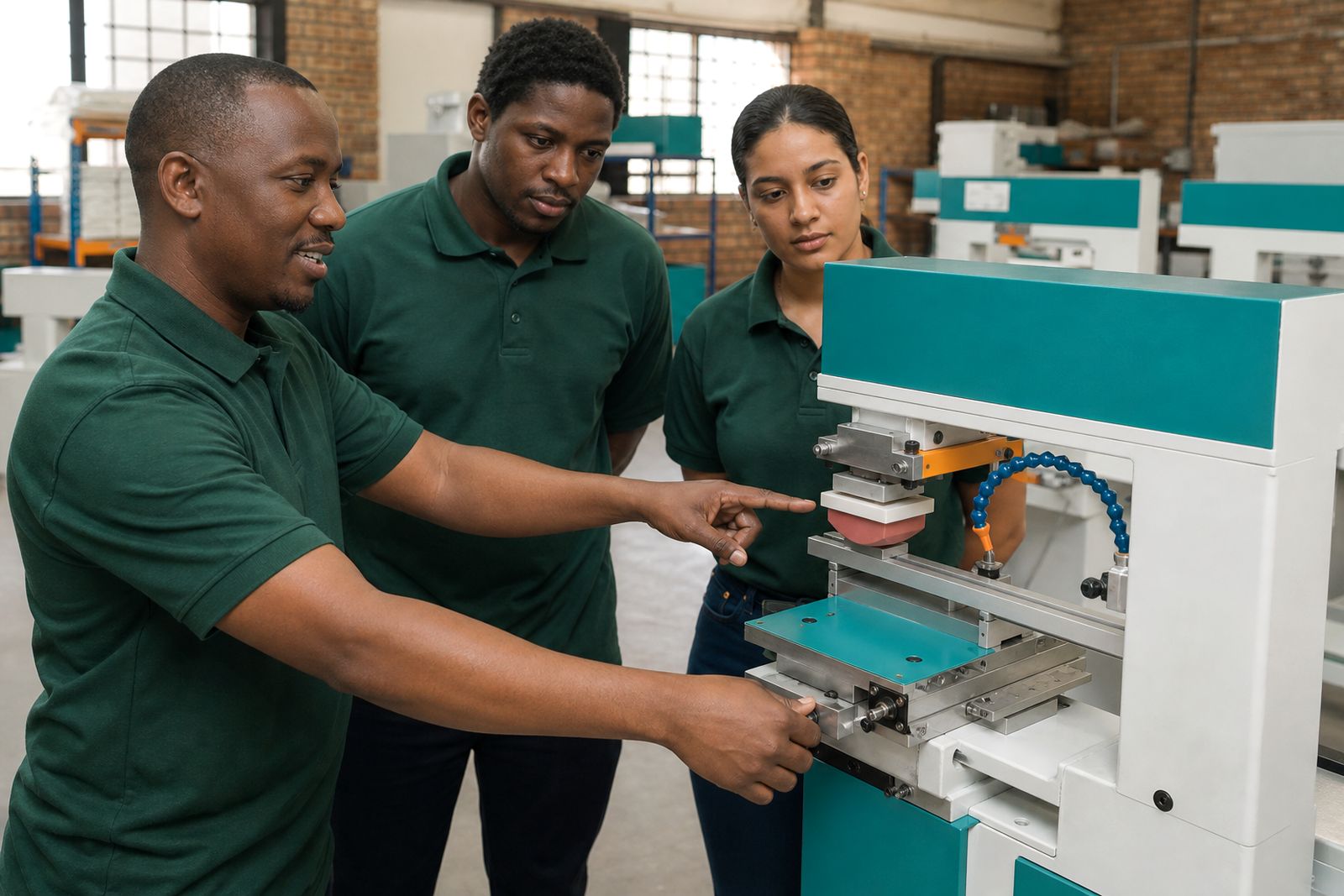
We install pad printing machines, get the first job running and train your operators on the actual products you plan to print. The session is practical, machine-led and built for South African branding teams working on pens, mugs, caps, labels and similar items.
From crate to running print station
Setup and training covers more than placing a machine on a bench and switching it on. Our team handles the machine installation, checks the print head movement, cup pressure, pad stroke and registration, then works through the first live print with your chosen item and artwork. That means your operators see the full job chain in the right order, from plate fitting and ink mixing to sample approval and repeat prints.
We work with branding businesses that print onto promotional products and garment components, not walk-in retail customers. If your shop is taking on pens, mugs, caps, labels or other shaped items, the training is done around those jobs so the operator leaves with a clear print routine rather than a generic demonstration.
- Machine positioning and installation at your site, or pre-dispatch setup for couriered units where required
- Initial mechanical checks, control settings and print stroke adjustment
- First print setup using your item, artwork, plate and pad combination
- Hands-on operator coaching on ink, pressure, alignment and repeatability
- Basic cleaning, shutdown and daily care procedures
What is included on the training day
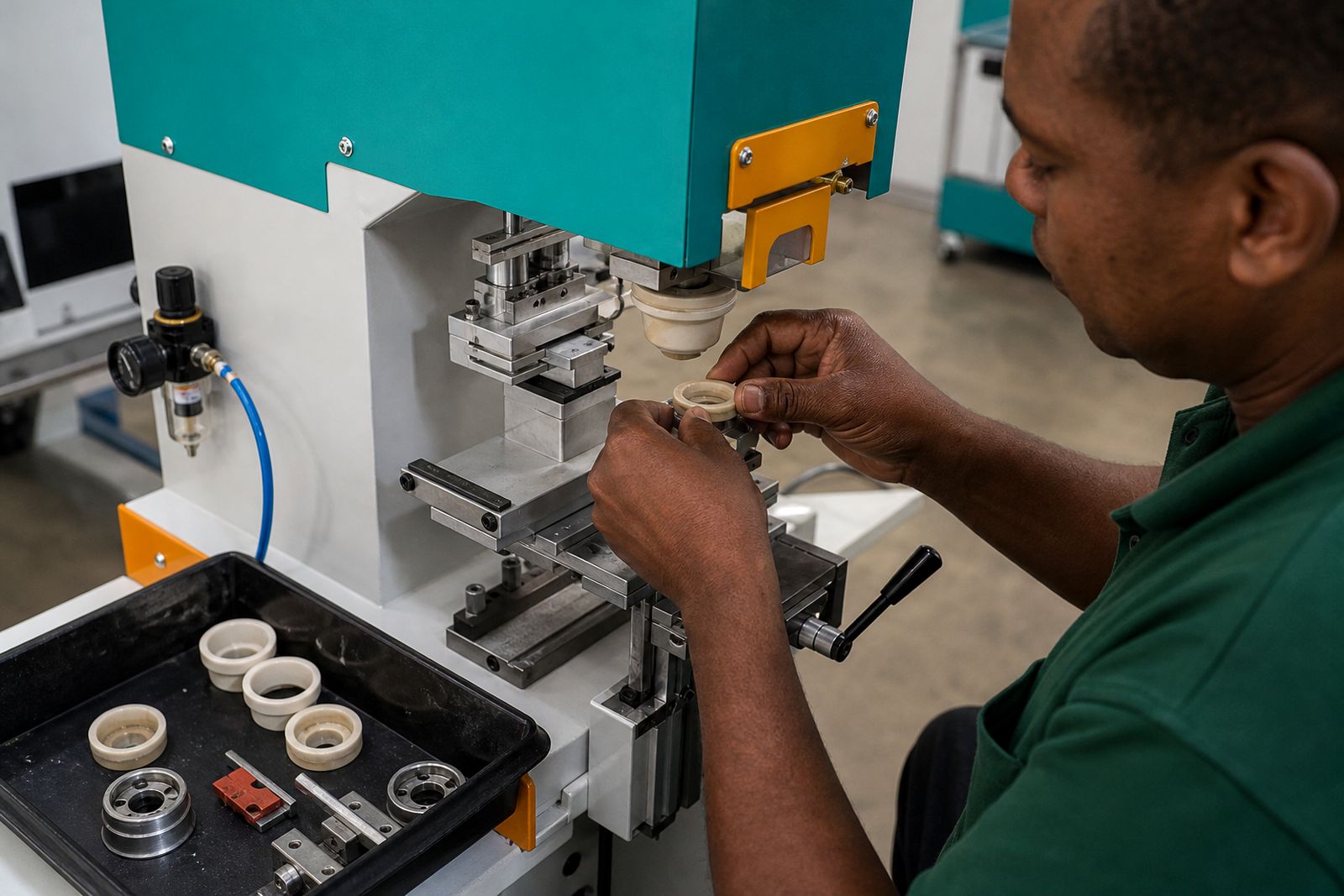
The session starts with the practical parts that affect print quality straight away. We mount the plate, fit the pad, prepare ink for the substrate, and set the machine for a stable transfer. Operators are shown how image size, pad hardness, pad shape and cliché depth all influence the final result. On curved drinkware and tapered items there is extra attention on alignment and fixture position, because that is where many early mistakes happen.
Training is not classroom-heavy. Your operator runs the machine during the session and learns by adjusting speed, stroke, dwell and placement under guidance. We also cover misprints, weak transfer, flooding, smudging and poor adhesion so the team can spot the cause while the job is still on the bench not after a full batch is packed.
- Plate and pad selection for the item being printed
- Ink mixing guidance for common promotional substrates
- Fixture or jig placement and repeat positioning
- Registration checks for single colour and multi-colour jobs
- Cleaning routines for cups, pads, plates and surrounding work area
- Operator practice on short live runs
The setup sequence we follow on site
Every installation follows a working sequence so nothing important gets skipped. First we inspect the machine and accessories against the planned job type. Next we level and place the machine, connect the required services, and test basic movement. Once the mechanics are right, we move to print preparation: cliché fitment, ink cup setup, pad selection and fixture alignment. Only then do we run test impressions and fine-tune pressure, stroke and image position.
After the first acceptable sample, the operator repeats the setup with coaching and records the settings used. That record matters for repeat work on popular items such as pens and caps. Before we finish, the machine is cleaned down and the team is shown where wear normally appears on pads, seals and plates, so routine checks become part of the shop day.
For Gauteng installations we carry out the work at your premises. For machines going to other provinces by courier, we can prepare the unit before dispatch and then guide your team through the commissioning steps with the same setup structure using your received components and job samples.
What your team should have ready
A smoother training day starts with the right material on hand. The most useful preparation is to choose one or two real items you expect to print often and have approved artwork ready at the correct size. If a custom fixture or jig is part of the order, the actual product sample should match the production item as closely as possible, including curvature and finish.
Please also make sure the machine area is clear, stable and close to the services needed for the model being installed. On pneumatic units, clean compressed air at the correct pressure is essential for consistent movement. Good bench height and lighting help too, especially when the operator is checking registration on small promotional products where one millimetre makes a visible difference.
- Finished product samples for setup and training
- Final artwork sized for the print area
- Relevant consumables, including inks, pads and plates ordered for the job
- A stable workbench with room for the machine, jigs and printed output
- Mains power and, where required, compressed air
- An operator who will run the machine regularly
How training and setup charges are worked out
Pricing is based on the machine type, the number of colours being set up, the complexity of the item shape and whether a standard or custom fixture is involved. A single colour pen job usually takes less setup time than a multi-colour print on a curved bottle or a cap panel with tight positioning. Travel and installation location also affect the costing, especially for work outside Gauteng.
Where a machine is couriered rather than installed in person, the setup portion may include pre-dispatch assembly and testing, while the training portion is adjusted to match the commissioning method. Consumables used for test printing, extra plates for multiple designs and special jigs are treated separately where needed. The aim is to match the charge to the actual work required, not to force every shop into the same package.
If you want the training built around a specific production line or repeated for a second shift later on, send those details through our contact form so the scope can be set correctly from the start.
Aftercare once the first jobs are running
The first week on a pad printer is usually when operators learn where small adjustments matter most. After installation and training, we continue to support the machine with consumables, replacement pads, cliches, inks, setup advice and service work where needed. If your print quality changes after a pad swap, a new ink batch or a different product shape, we help trace the likely cause in a practical way.
For many branding shops, repeatability matters more than maximum speed. That is why aftercare focuses on keeping print positions stable, maintaining clean plate and cup surfaces, and replacing worn parts before they start affecting transfer quality. If you later add a new product line such as labels, drinkware or another promotional item range, we can assist with the correct setup parts and operator guidance for that application.
Our Midrand team supports installations across Gauteng and arranges machine, ink and pad deliveries to every province.
What our Pad Printing customers say
Verified Google reviews
Questions we get asked
Do you train more than one operator?
Yes. The session can include the main operator and additional staff who need to handle setup, printing or daily cleaning. It works best when at least one regular machine operator is present for the full session.
Can training be done on our own products?
Yes. In fact that is the best way to do it. Real samples such as pens, mugs, caps or garment labels make the setup relevant and help the operator leave with settings that can be used in production.
Do you help with fixtures and jigs during setup?
Yes. If a custom jig or fixture forms part of the job, we include its positioning and adjustment during setup so the item sits consistently for repeat prints.
Tell us about the job
Send sizes, materials and where you are through our contact form, and we will come back with the practical options.
Open the contact form