Silicone pads
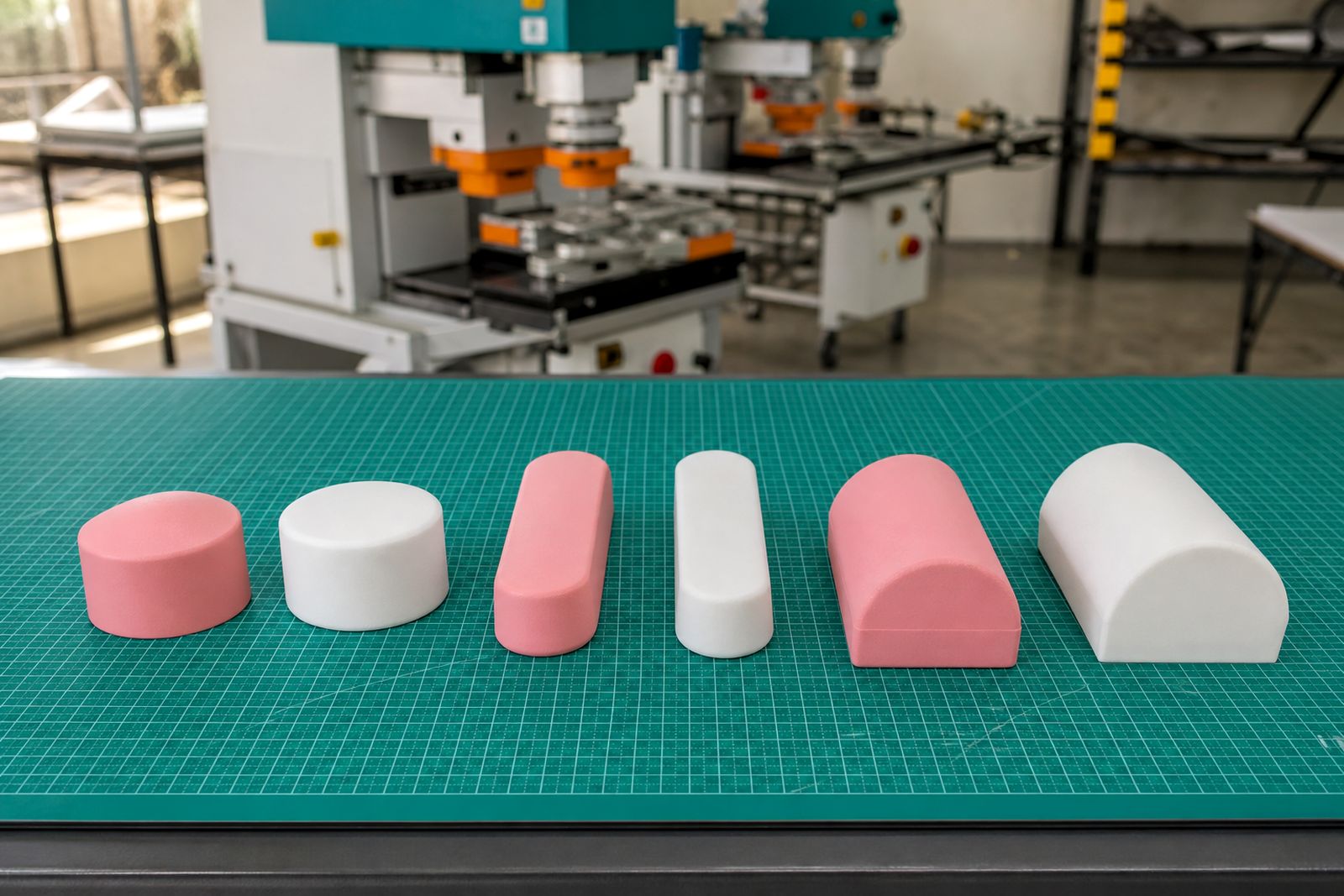
Silicone pads carry the image from the plate to the product, so pad shape and hardness affect print quality more than many buyers expect. We supply round, bar and loaf pads in practical size ranges for branding workshops running pens, mugs, caps, labels and other promotional items.
What a silicone pad does on the machine
A silicone pad lifts the inked image from the cliché and releases it onto the item being printed. The right pad must compress evenly, pick up fine detail cleanly, and then roll or press onto the part without trapping air. On small logos this can look quite forgiving, but once you move onto curved drinkware, deep cap panels or narrow label positions, pad choice starts to decide whether the print is usable.
We match pads to the image area, the item shape and the machine stroke. A pad that is too soft can distort thin lines and close small counters. One that is too hard may not conform to the product and can leave weak transfer at the edges. Height matters as well, because the pad needs enough body to deform and recover properly during the cycle.
- Round pads for general small item work and centred artwork.
- Bar pads for long narrow prints such as pen barrels and slim label zones.
- Loaf pads for broader images, flatter contact and selected curved surfaces.
- Hardness grades chosen to suit fine detail, solid coverage or awkward shapes.
Shapes, sizes and where each style earns its keep
Round pads are a common starting point for short logos on pens, small badges, closures and compact flat areas. Their dome helps reduce air entrapment and gives a predictable contact pattern. Bar pads suit long artwork where a circular pad would waste movement or distort the ends of the image. Loaf pads are useful where the print is wider and the part gives you a stable landing area, such as some box lids, flatter mug panels and selected packaging components.
Every shape has a working limit. A pad should not be selected only because it physically fits in the machine. If the image sits too close to the shoulder of the pad, transfer can become patchy. If the item curvature is tighter than the pad can roll across, you start chasing setup problems that a different pad shape would have avoided.
- Small round pads suit tight image areas and compact products.
- Medium round pads handle many everyday promotional jobs.
- Long bar pads help with horizontal logos on pens and tubes.
- Loaf pads suit broader prints where stable contact is possible.
- Taller profiles generally cope better with uneven or curved items.
Hardness grades and the print problems they solve
Pad hardness is usually discussed as soft, medium or firm, but the practical question is how the pad behaves under pressure on your specific item. Softer pads conform more easily to uneven or curved surfaces, which helps on bottles, mugs and some cap areas. The trade-off is that they can spread the image slightly, especially on fine text or tightly spaced detail.
Medium grades are often the most flexible option for mixed work. They give enough conformity for common promotional items while keeping better control over line sharpness. Firmer pads suit flatter products, cleaner edge definition and jobs where image distortion must be kept low. They are less forgiving on uneven mouldings or deep curvature, so the fixture and stroke settings need to be right.
If a print looks heavy in the middle, weak at the edges, or slightly stretched, the issue is not always the ink. Pad height, hardness and shape are often the first things we check. A small change here can save a lot of wasted makeready.
Where silicone pads work well and where they do not
Silicone pads are suited to many branded item categories because they can transfer onto surfaces that are not perfectly flat. That includes pens, lighter-style products, caps with suitable fixtures, garment labels, key holders, some cosmetic containers, mugs and cylindrical bottles. With the correct jig and image size, a single machine can cover a fairly wide product mix.
There are limits though. Very deep recesses, sharp step changes, rough textures and unstable items can defeat even a well chosen pad. If the substrate moves under contact, or the print area sits across a seam or mould line, the result may never be consistent. Large wraparound decoration on drinkware also has boundaries, and some jobs are better handled by another print method. It is better to say that early than sell a pad that will always be a compromise.
- Good fit for pens, caps, labels, closures and many promotional gifts.
- Useful on selected mugs and bottles when image size is controlled.
- Less suitable for deep recesses, coarse texture and unstable parts.
- Not ideal where the print crosses seams, heavy taper or abrupt shape changes.
Fitting, workshop conditions and day to day care
Silicone pads do not need special site services, but they do need sensible workshop handling. Pads should be mounted squarely, kept free from dust and fibres, and used with settings that do not over-compress the face. Too much pressure shortens pad life and can create halo marks around the image. On inland winter mornings, and in humid coastal conditions, ink behaviour may shift before the pad itself does, so operators should judge the whole setup rather than blaming the pad alone.
Cleaning must be gentle. Harsh wiping and incorrect solvents can swell or glaze the surface. Many operators use tape or approved cleaning methods to lift dried ink and lint between runs. Storage also matters. Pads should sit away from heat, direct sun and anything that can dent the printing face. A pad that looks fine in the rack can still print poorly if it has taken a set from bad storage, which is easy to miss.
When a pad loses release, shows cuts, or develops a shiny worn face, it is usually time to replace it rather than keep adjusting the machine. That usually saves time and scrap, even if the old one still looks useable.
What to send when asking about pads
We supply pads to branding businesses running pad printing equipment in Gauteng and across South Africa. To match the right pad, we need more than the product name. The print area, product shape and machine setup all affect the recommendation, and a quick photo often helps more than a long description.
Please send the details through our contact form with as much of the following as you have. If you already know the current pad shape and size, include that too, even if you are not happy with the result.
- Item type, such as pen, mug, cap, label or bottle.
- Material and whether the print area is flat, curved or textured.
- Artwork size in millimetres, including length and height.
- Photo of the item with the print position marked.
- Machine type and whether the job is single or multi colour.
- Any problem you are seeing, such as distortion, weak transfer or trapped air.
- Approximate production volume, because wear pattern matters on long runs.
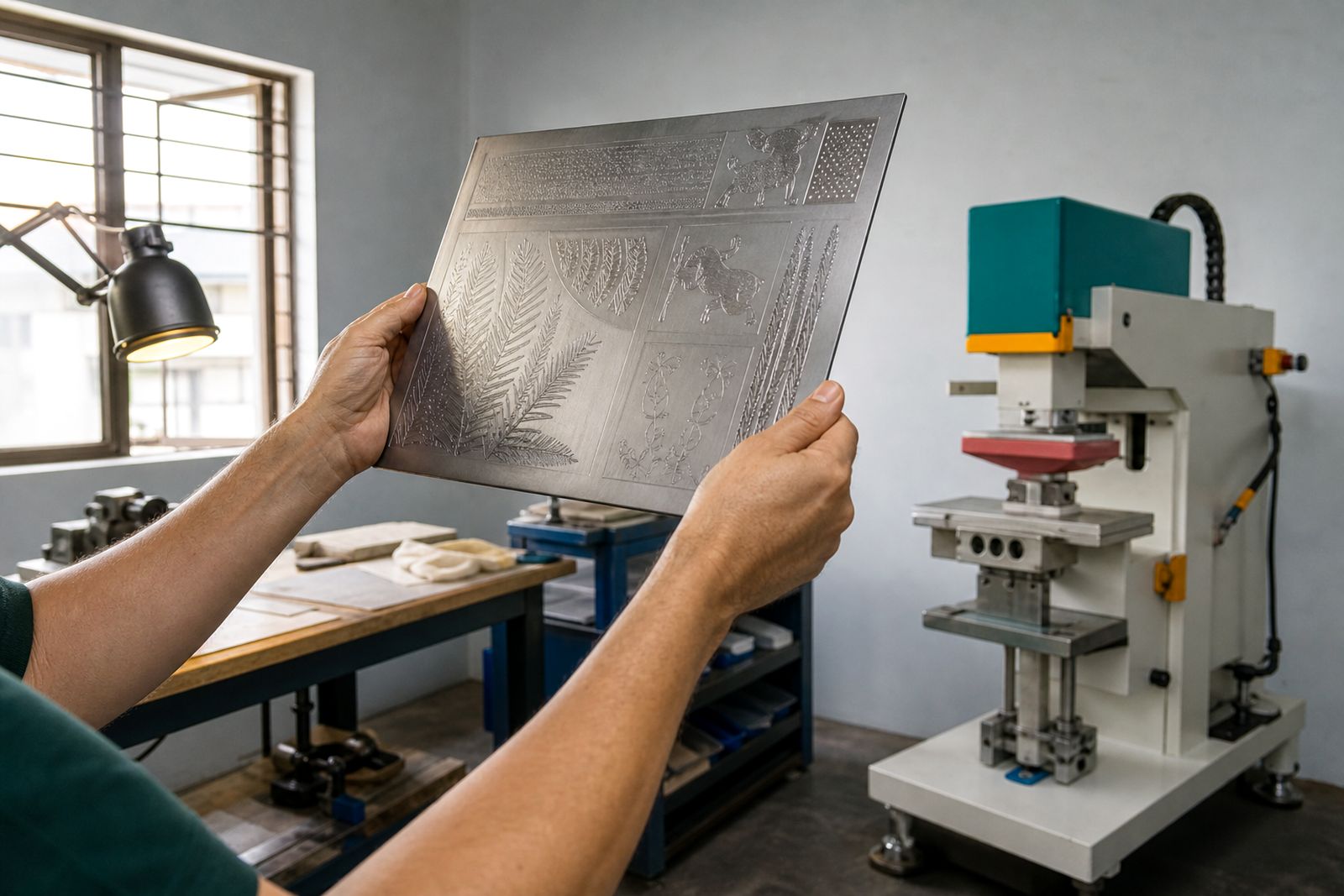
Where needed, we can also advise on related items such as clichés and custom jigs so the whole print setup works together rather than one part fighting the rest.
What our Pad Printing customers say
Verified Google reviews
Questions we get asked
Can one pad handle every item we print?
Usually not. A general purpose pad can cover some everyday work, but mixed jobs with pens, caps, mugs and labels often need different shapes or hardness grades to keep transfer clean.
Do softer pads always print better on curved products?
Not always. Softer pads conform more easily, but they can distort fine detail. The best choice depends on the curve, image size, line thickness and how stable the item sits in the jig.
Can you help if our current prints are patchy or stretched?
Yes. If you send photos of the item, the artwork size, the present pad and the print fault through our contact form, we can suggest a more suitable pad and related setup changes.
Tell us about the job
Send sizes, materials and where you are through our contact form, and we will come back with the practical options.
Open the contact form