Cliches and plates
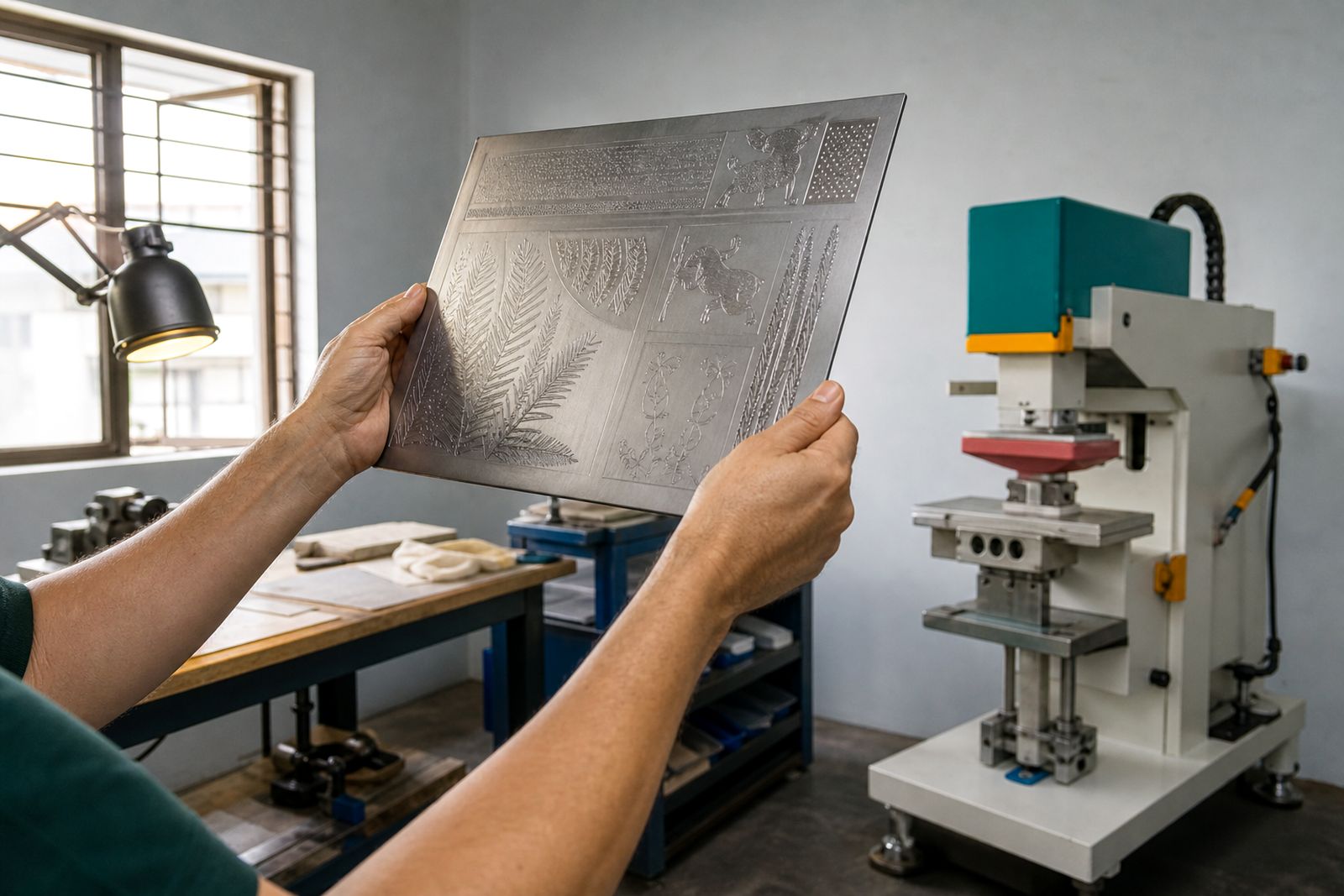
Cliches carry the image that the silicone pad lifts from and transfers onto the product. We supply etched steel and polymer plates made from your artwork, matched to the machine, ink and item you need to print.
The plate is where print quality starts
In pad printing, the cliche is the image carrier. Your artwork is exposed or etched into the plate surface to form the inked recess, and that recess has to suit the item, the ink and the level of detail in the logo or text. If the plate is too shallow, too deep or made from the wrong material, the print becomes inconsistent even when the machine setup looks right.
We supply plates for branding businesses printing promotional products and garment components rather than finished retail decoration for the public. Artwork is prepared for pad printing, then produced as either polymer or steel depending on the job mix and the expected production volume.
- Polymer plates for shorter runs, regular artwork changes and cost-sensitive setup.
- Etched steel plates for longer runs, repeat jobs and fine detail that must stay stable over many cycles.
- Plate preparation matched to single colour, shuttle and multi-colour pad printing machines.
Polymer or steel, and when each makes sense
Polymer plates are a practical choice where artwork changes often, such as seasonal promotional campaigns, test runs or several small client orders in one week. They are quicker to prepare and suit many standard jobs on pens, labels and flat plastic parts. Their working life is lower than steel, so they are not the best fit for very long production sequences on abrasive inks or heavy daily use.
Steel cliches are used where repeatability matters over a longer period. They suit branding shops that run the same logo on pens, caps clips, bottle bodies or label components across many batches. Steel also helps where line edges and small characters must hold shape for longer before the plate needs replacement.
- Choose polymer when artwork turns over often and run lengths are moderate.
- Choose steel when you want longer plate life and steadier results on repeat work.
- For very small text, thin outlines and close registration work, steel is usually the safer route.
Neither plate type will rescue unsuitable artwork. Extremely soft fades, broad photographic shading and oversized solid areas can be troublesome in pad printing, especially on curved items where the silicone pad has to compress and release cleanly. In those cases we may advise adapting the art before the plate is made.
Sizes, image area and practical working limits
Plate size depends on the machine cup or doctoring system, the image size and the distance needed between one image and the next on multi-up layouts. A larger plate does not automatically give a better print. It needs to match the ink cup diameter, the pad shape and the item being decorated.
For smaller promotional products such as pens, clips, keyholders and narrow labels, compact plate formats are common. Mugs, bottles and larger cap panels may need more image area, especially where a bolder logo or a second colour is involved. Multi-colour work also needs proper allowance for registration marks and shuttle movement.
- Common plate thicknesses are selected to suit the machine setup and clamping arrangement.
- Fine lines and small text need controlled etch depth and clean artwork edges.
- Large flooded areas can print unevenly if the image is not prepared with pad movement in mind.
- Very deep curves and sharply stepped mouldings may need artwork reduction or a custom jig to keep the print area consistent.
If you are printing onto irregular drinkware or domed components, the plate is only one part of the result. Pad hardness, pad shape, ink drying speed and fixture accuracy all matter, otherwise the image can stretch or break at the edges.
Artwork, machine fit and site details we need
We make plates from supplied artwork, so the best starting point is a clean vector file with text converted to outlines. If the job uses more than one colour, each colour needs its own separated artwork and its own plate. We also need to know which machine the plate is for, because plate size and locating details differ between setups.
Your site does not need special utilities for plate supply itself, but machine compatibility is important. The plate must fit the holder correctly, run under the cup or doctor blade properly and line up with the fixture on the print stroke. A mismatch here wastes setup time and can damage the plate.
- Machine model or plate holder size.
- Product being printed, such as pens, mugs, caps or labels.
- Print area in millimetres, including curvature if relevant.
- Number of colours in the design.
- Expected run pattern, for example frequent artwork changes or repeat batch production.
- Whether you also need pads, ink advice or a custom jig.
If you are unsure about the image area, send photos with a ruler against the product. That helps us judge whether the artwork should be reduced, re-spaced or split for a better transfer.
Handling, cleaning and storage in the workshop
A cliche is a precision consumable, not a rough workshop part. The image recess can be damaged by scratching, careless wiping or dried ink being scraped off with a hard tool. Good handling extends usable life and keeps registration steadier over repeat jobs.
After production, remove ink with the correct cleaner for the ink system being used and wipe with a lint-free cloth. Plates should be stored flat, dry and protected from dust. In Gauteng's drier months static and loose dust can settle quickly on exposed surfaces, while damp conditions during courier transit need proper wrapping to avoid corrosion marks on untreated metal parts.
- Do not stack exposed image faces directly against each other.
- Keep used plates labelled to the artwork and product for easier repeat setup.
- Avoid metal picks, blades or abrasive pads on the etched image.
- Check cup pressure and alignment if a plate shows unusual wear patterns.
Polymer plates need especially careful storage because edge knocks and surface pressure can shorten their useful life. Steel lasts longer, but it still needs clean handling and sensible storage between jobs.
What to send when asking for plates
To quote the correct cliche and avoid a remake, send the artwork together with the product details and the machine information through our contact form. If this is a new application, include a photo of the item and mark the intended print area. Where registration is tight or the surface is curved, a sample item is often the quickest way to judge the plate layout and whether a custom fixture is needed.
For repeat jobs, mention whether you want the previous image size kept exactly the same or adjusted to fit a new batch of products. Small dimensional changes on imported promotional goods happen often and can affect print placement more than expected.
- Vector artwork, preferably PDF, AI or EPS.
- Print width and height in millimetres.
- Substrate and item shape.
- Machine type and existing plate size if known.
- Ink type already in use, if you have it.
- Any sample photos showing the desired print position.
We can also help you match the plate choice with pads, inks and jigs so the full print setup works as one system, not just as separate parts.
What our Pad Printing customers say
Verified Google reviews
Questions we get asked
Can one plate print every kind of item?
No. The artwork may stay the same, but plate size, image area and sometimes the layout need to change for different products or machine setups.
Are polymer plates good enough for commercial branding work?
Yes, for many standard jobs they work well. Where runs are long, artwork repeats often or fine detail must hold for longer, steel is usually the better choice.
Do I need to send the physical product?
Not always. Clear artwork, dimensions and photos are often enough, but a sample item helps on curved surfaces, tight print areas or jobs that may need a custom jig.
Tell us about the job
Send sizes, materials and where you are through our contact form, and we will come back with the practical options.
Open the contact form