Single colour pad printer
Our single colour pad printer is built for clean one colour marking on small promotional items and garment components. It suits branding shops that need steady repeatability on pens, keyrings, caps, labels and similar parts.
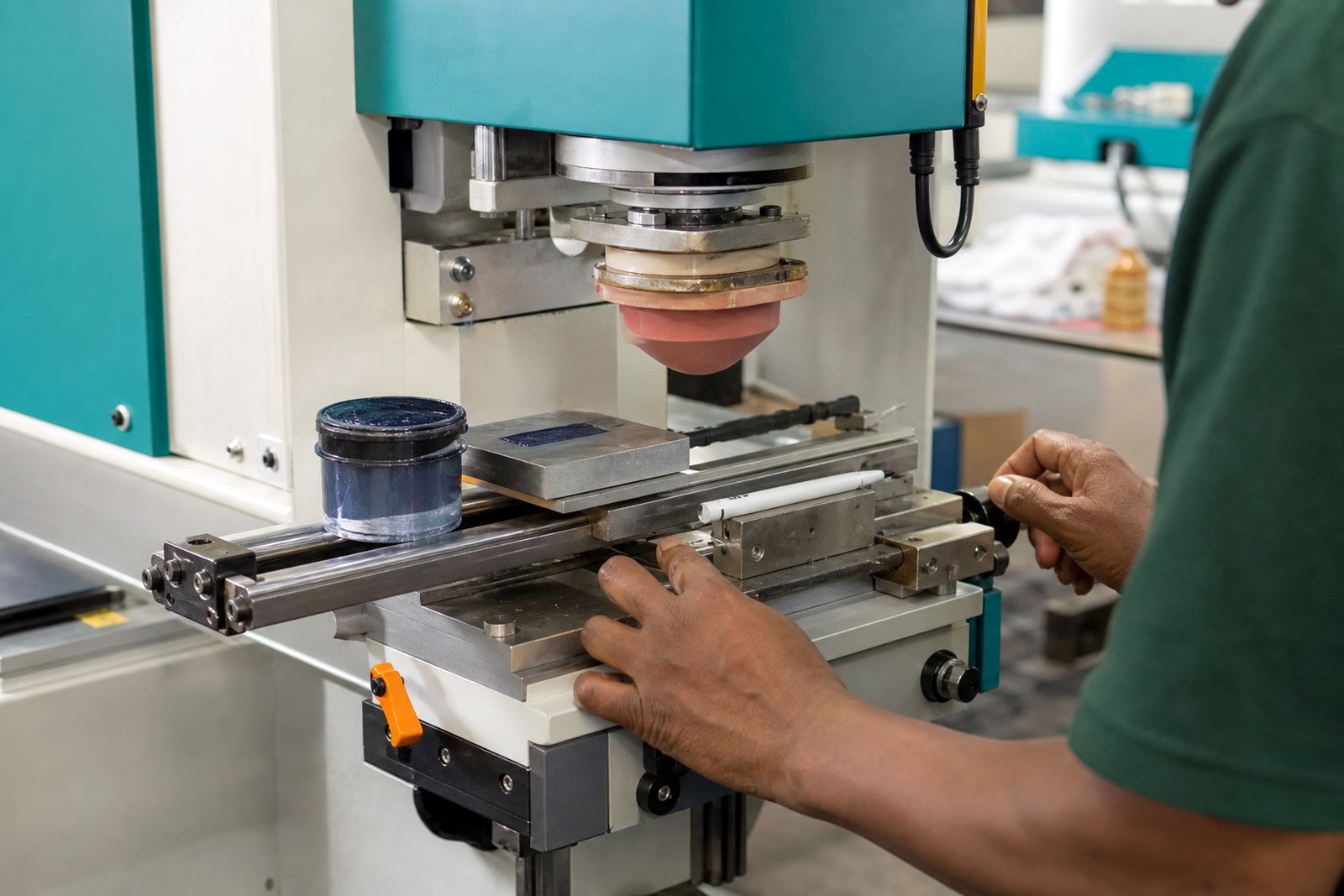
Built for one colour production on small parts
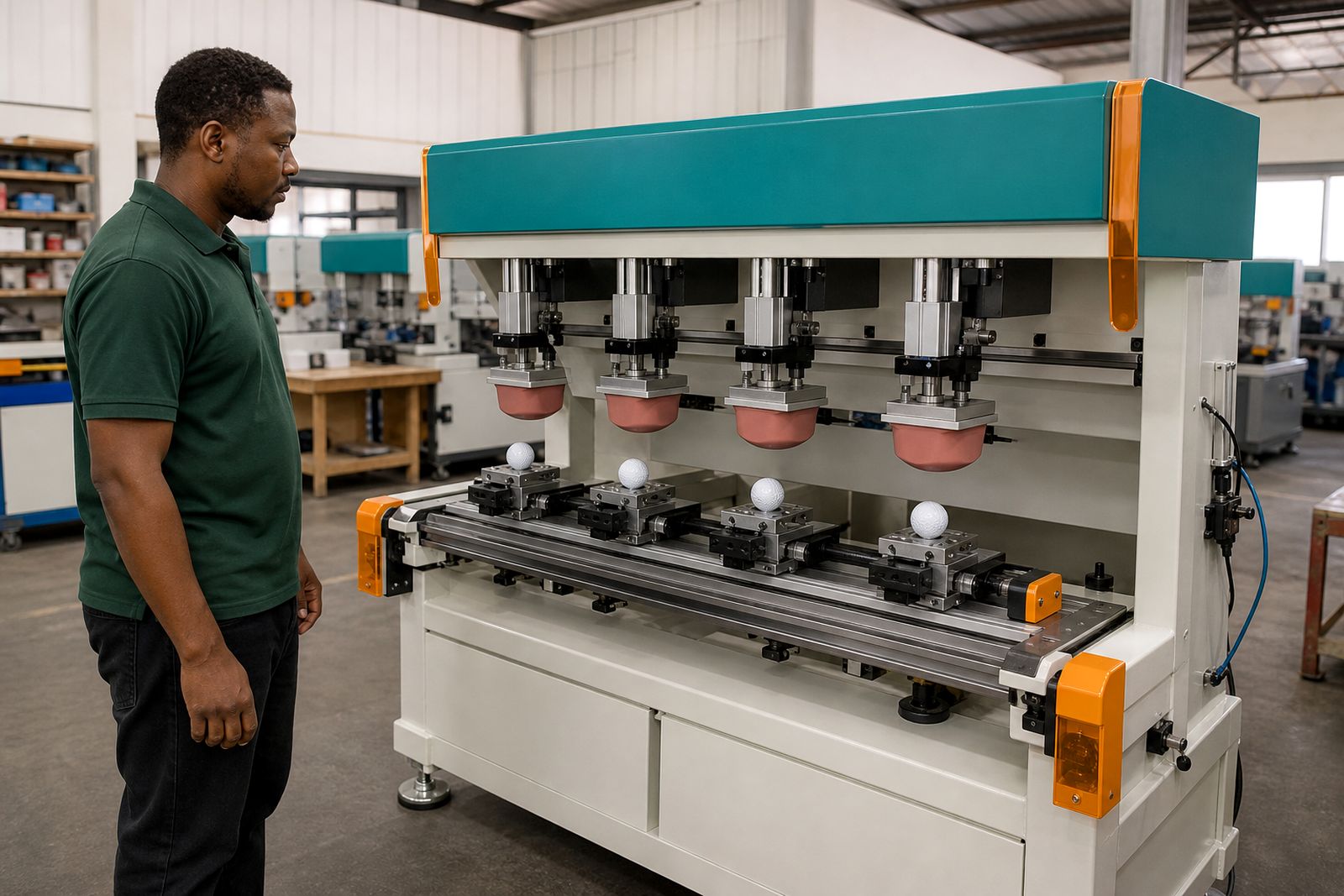
This machine uses a sealed ink cup system to pick up artwork from the plate and transfer it to the product with a silicone pad. For many branding shops, a single colour unit is the practical place to start because the setup is straightforward and changeovers are easier to manage than on a multi-colour line.
It is most often used where the logo is a single spot colour and the print area is modest. Pens, flat keyrings, lighter-size items, small caps panels, garment labels, plastic tags and similar pieces are typical work. The sealed cup helps keep ink condition more consistent through the shift, which matters when you are repeating the same mark across a few hundred or a few thousand parts.
- Best suited to one colour logos, codes and simple graphics.
- Common jobs include pens, keyrings, labels, clips and small moulded parts.
- Works well where the item shape is repeatable and can be held in a fixture.
Print sizes and machine options
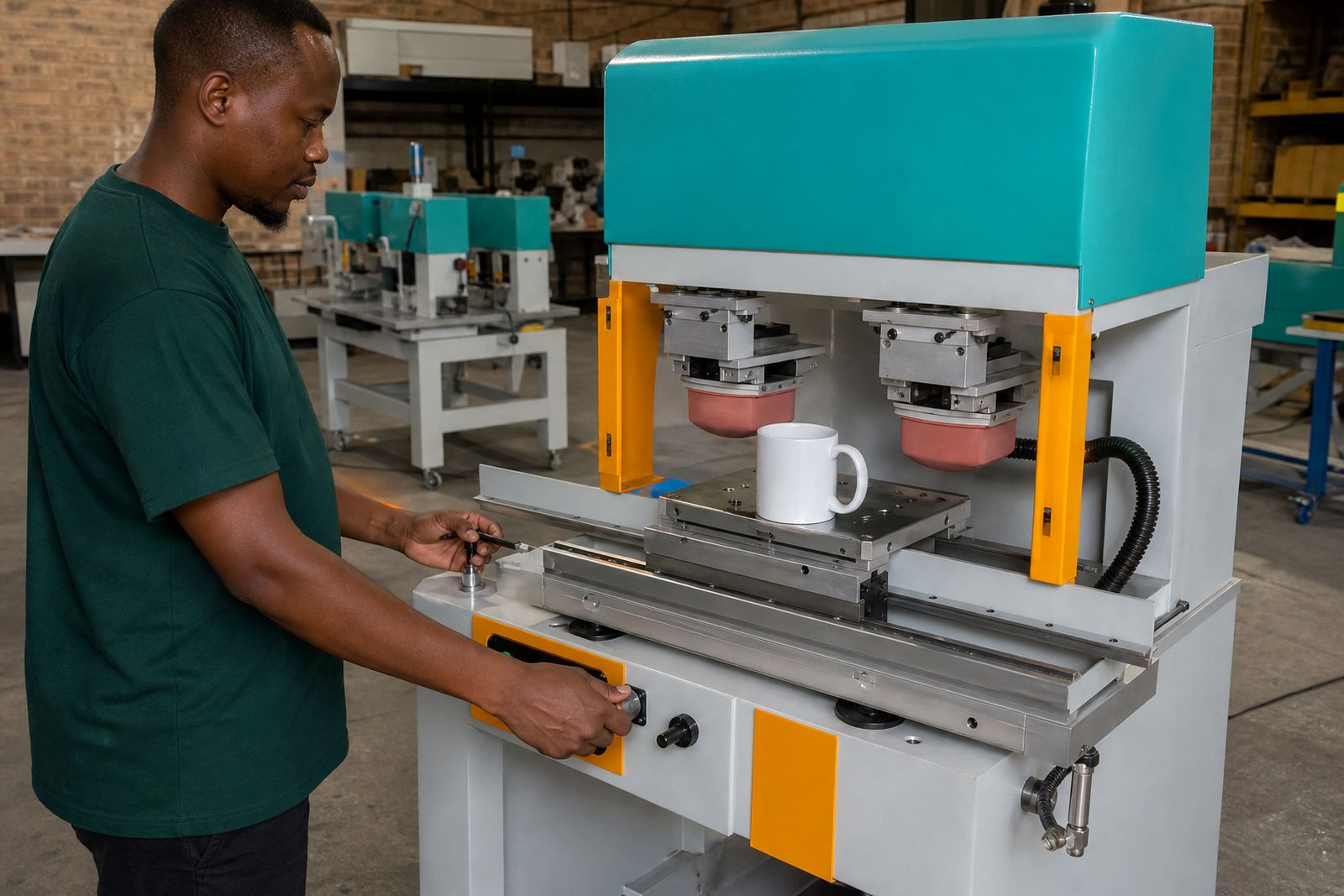
The right machine size depends on the artwork area, the shape of the item and the speed you need from the station. A single colour pad printer is not one fixed format. We match the cup size, plate size and pad range to the jobs you run most often, so the machine is not oversized for pens or undersized for broad flat labels.
On small promotional work, the usual print area is often somewhere between 20 x 20 mm and 90 x 60 mm. Larger marks are possible on selected setups, but the part geometry starts to matter more as the image grows. Curves, recesses and raised edges can limit what transfers cleanly in one hit, and that is where a sample review helps avoid the wrong machine choice.
- Small format setups suit pen barrels, clips, tags and compact keyrings.
- Mid format setups suit larger badges, flat inserts and broader label areas.
- Pad hardness and shape are selected around the product contour and image detail.
- Custom jigs keep the part in the same position for each cycle.
If your work changes between tiny prints and broader logos during the week, tell us that early. It affects cup size, plate layout and how many fixtures you are likely to need.
Where a single colour machine fits well, and where it does not
This model suits a branding business that needs reliable one colour output without moving straight to a shuttle or four colour system. It is a good match for contract branding rooms, small production floors and garment trim operations where the print is repeated on the same item family for hours at a time.
It is not the right answer for every brief. If the logo needs two registered colours, if the image wraps far around a bottle, or if the part has deep texture and inconsistent mould lines, a different machine or process may be the better route. Very large graphics can also push beyond what is sensible on a compact single colour setup.
- Good fit for single spot colour branding on repeat jobs.
- Useful where setup simplicity matters and operators change jobs during the day.
- Less suitable for multi-colour registration work.
- Less suitable for very deep curves, broad wrap prints or oversized artwork.
For mugs and bottles with longer wrap zones, we would usually look at a machine and fixture arrangement built around curved items rather than forcing the job onto a compact unit. That saves time and waste later on.
Shop requirements and installation notes
This machine is normally installed in a clean, level work area with steady mains power and enough bench or stand space for the printer, inks, pads, plates and fixtures. In Gauteng shops the environment is usually manageable, but ink behaviour still shifts when afternoon temperatures climb. In coastal areas, humidity can affect drying and handling between prints, so the working method may need small adjustments.
You will also need room for parts staging before and after printing, plus a sensible place for solvent handling and cleaning. The printer itself does not need a large footprint, but the surrounding workflow often decides whether production feels tidy or cramped.
- Level floor or bench position with stable mains supply.
- Ventilated work area for inks, thinners and cleaning fluids.
- Space for jigs, spare pads, plates and wipedown materials.
- Good task lighting for registration checks and print inspection.
Where load-shedding is part of the week, it helps to plan the print station near backed-up power if the production line must keep running. We handle installation in Gauteng and can arrange machines, pads and inks to other provinces by courier.
Daily care and the parts that wear
A single colour pad printer is straightforward to maintain if the daily routine is done properly. The cup ring, pad surface, plate condition and ink mix all affect print quality long before the machine itself is at fault. Most issues seen on press are from worn consumables, poor fixture alignment or ink that has drifted too far from the right working condition.
Operators should keep the pad covered when idle, clean the plate carefully, and check that the jig still locates the part without play. Silicone pads are consumables, not permanent tooling, and they need replacing once they lose shape or stop releasing ink cleanly. The same goes for cup rings and plates after long use.
- Clean plate and cup area at the end of each run.
- Store pads away from dust, heat and direct sun.
- Check fixtures for movement before starting a new batch.
- Keep the correct ink and thinner combination with each job record.
We supply the ongoing consumables for this machine, including inks, silicone pads, cliches and replacement wear parts, so the station can stay consistent from one batch to the next.
What to send when asking about this machine
The quickest way to match a single colour printer to your work is to tell us about the actual item, not only the logo size. A pen barrel and a flat keyring might carry a similar artwork width, but the fixture, pad shape and handling method will differ a lot. Photos help, and a sample part is even better where the surface shape is tricky.
When you contact us through our contact form, include the main product types you print, the largest and smallest image areas, the expected batch size and whether you need us to supply fixtures and plates as part of the package. If you already use pad printing, mention the ink families and the surfaces you are marking, as that often points to the right setup faster.
- Product type and material, such as plastic, coated metal or fabric label stock.
- Artwork size in millimetres and whether the mark is flat or on a curve.
- Typical batch quantity and how many job changes you do in a day.
- Need for custom jigs, spare pads, extra plates or setup training.
If you have a difficult item with mould lines, taper or a recessed print zone mention that upfront, it matters more than many buyers expect.
What our Pad Printing customers say
Verified Google reviews
Questions we get asked
Can this machine print on pens and keyrings?
Yes. Those are among the most common uses for a single colour pad printer, provided the item can be located properly in a fixture and the artwork suits the available print area.
Is a single colour machine enough for garment labels and cap panels?
For one colour branding, often yes. The deciding factors are the image size, the surface shape and whether the label or cap panel can be held consistently during printing.
Do I need custom fixtures for every product?
Usually, yes for good repeatability. Some similar items can share a fixture, but most production work is more stable when each product has a jig made around its shape and print position.
Tell us about the job
Send sizes, materials and where you are through our contact form, and we will come back with the practical options.
Open the contact form